
Key takeaways
- Yes, for most roofing companies: offering financing turns a $14,000 lump sum into a monthly payment a homeowner can say yes to — and that is usually what closes the job.
- ServiceTitan’s 2025 report with Synchrony and Visa found a 12% relative close-rate lift and 13% larger average tickets for contractors offering financing.
- Dealer fees run roughly 0–4% on standard-rate loans and 8–13%+ on 0% promos — price the fee into your margins, never as a surcharge on financed jobs.
- The honest catch: financing fixes affordability, not trust. If your close rate is low because of sloppy estimates or no reviews, a lender logo will not save it.
Should your roofing company offer financing? For most residential shops, yes — because the reason most estimates die is not that the homeowner dislikes your company. It is that a $14,000 roof, due in full, is a number most households cannot say yes to on the spot. Financing turns that number into a monthly payment, and that changes the conversation from “can we afford this?” to “which option fits our budget?”
I ran a 15-person roofing crew, and the pattern was always the same: the homeowner loved the shingle, liked the crew, trusted the estimate — and then went quiet for two weeks while they figured out how to pay for it. Half of those never came back. A financing option at the kitchen table does not make a bad company good. It removes the one obstacle that kills good estimates.
What financing actually does to your close rate
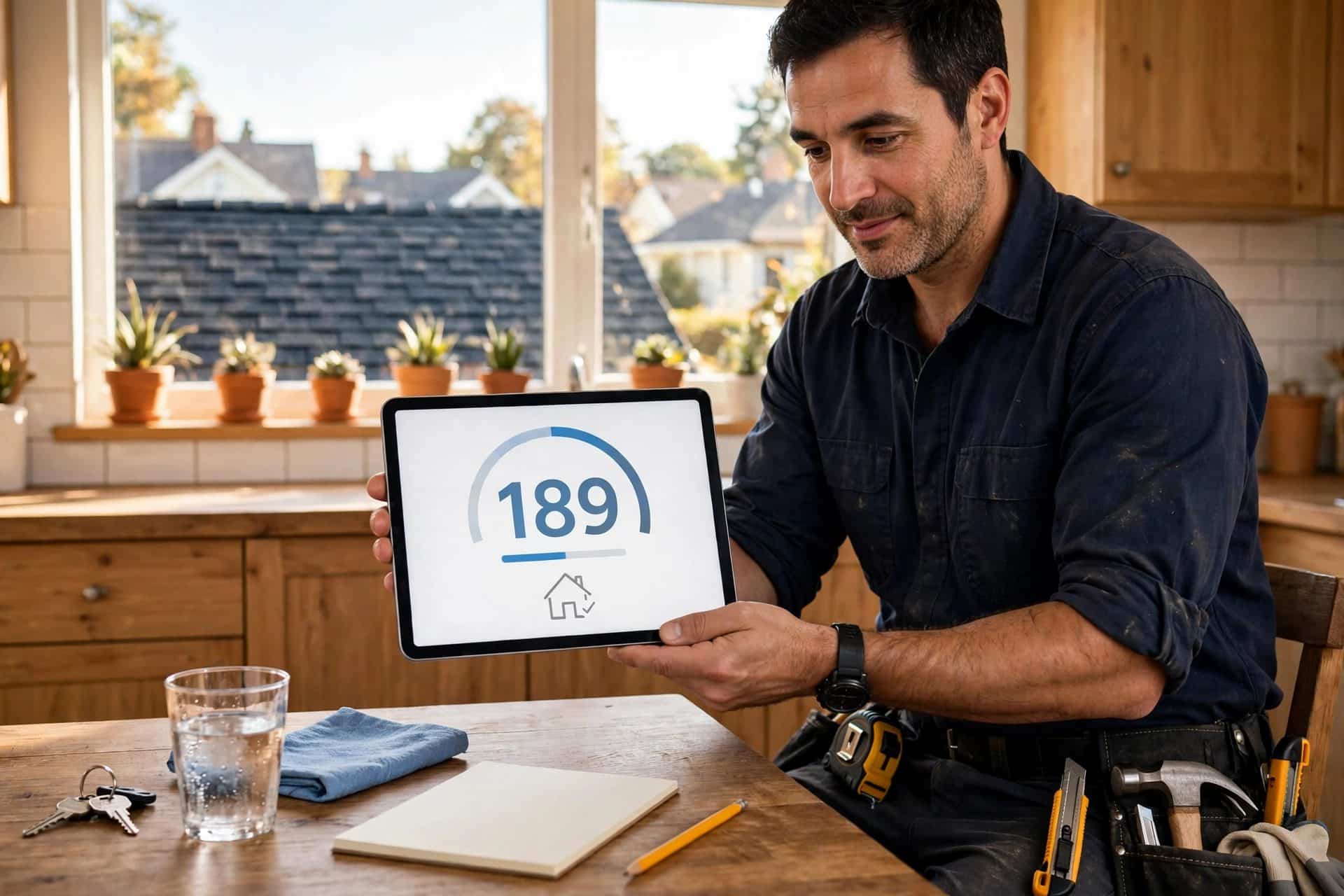
Financing raises your close rate because it changes what the homeowner is deciding. Without it, they compare a $14,000 total against their savings account. With it, they compare a $189–$260 monthly payment against their other monthly bills. That is a much easier yes.
According to ServiceTitan’s 2025 Consumer Trends in the Trades report, produced with Synchrony and Visa, contractors offering financing saw a 12% relative lift in close rate and 13% larger average tickets. The ACCA Contractor of the Future study cited in the same reporting found close rates jumping from 38% to 49% once financing entered the conversation. Treat vendor-reported numbers with healthy skepticism — lenders sell financing, so their studies lean friendly — but the direction is consistent across every independent source: more approvals, bigger tickets, faster yeses.
Harvard’s Joint Center for Housing Studies found the same effect from the homeowner’s side: in its Improving America’s Housing 2025 report, projects paid with contractor-arranged financing averaged $10,600, against $5,000 paid from savings and $4,000 on credit cards. When the payment fits, homeowners stop cutting scope — they keep the gutters, the upgraded shingle, the ventilation fix. That is where the bigger ticket comes from: not upselling, but scope that survives.
How contractor financing actually works
You are not becoming a bank. You partner with a lender or a multi-lender platform — names roofers actually use include GreenSky, Synchrony, Wisetack, Service Finance, and Hearth — and the homeowner applies at the estimate, usually on a tablet, with a soft credit pull for pre-qualification. The lender makes the credit decision, sets the terms, and pays you directly, usually within 1–3 days of completed work. The homeowner pays the lender monthly. Your company never carries the loan.
There are two models worth knowing. In the dealer-fee model, you pick one lender and a few preset loan offers, and you pay the lender a percentage of each financed job — the dealer fee — in exchange for offering below-market rates or 0% promos. In the marketplace model, one application shops multiple lenders, usually with no dealer fee to you, and the homeowner picks the best offer. Single-lender programs are simpler to run; marketplaces approve more homeowners because a decline at one lender can still pass at another. If your market skews toward lower credit scores, approval rate matters more than promo flash.
One operational detail that trips up first-timers: with most dealer-fee lenders, you cannot collect a deposit before the job is done — the lender pays after completion paperwork is signed. Plan your materials cash flow around that, or you will be floating $6,000 of shingles on a job you have not been paid for yet.
The dealer fee: the real cost, worked out honestly
Dealer fees are the price of offering the loan, and they climb with the promo. As Ottri’s 2026 contractor financing guide lays out, standard-rate loans run roughly 0–4% in dealer fees, 12-month same-as-cash runs about 8%, and 24-month plans run 11–13% or more. Enhancify’s dealer-fee explainer puts the full range at 3% to as high as 45% for the most aggressive promos — the fee is how the lender gets paid when the homeowner pays 0%.
Run the math on your own numbers before you sign anything. Take a $14,000 job at a 30% gross margin: $4,200 gross profit. A 9% dealer fee on a 0% promo costs $1,260 — nearly a third of that profit, gone. The same job with a standard-rate plan at a 2% fee costs $280. That is why the smart shops do not offer 0% on everything. They reserve the expensive promos for full replacements over $10,000, where the close-rate lift justifies the fee, and use standard-rate plans with 1–3% fees on smaller jobs.
Two rules here are non-negotiable. First, charge cash and financed customers the same price. Under Regulation Z, a higher price for financed customers can count as a finance charge, and adding a “financing surcharge” is illegal in most states. Bake the expected fee into your price book so every customer sees one number. Second, never let the dealer fee quietly eat your margin on a job you would have closed anyway — if a homeowner was paying cash, do not steer them into a financed plan just because the application is sitting open. For a refresher on building that price book correctly, see how to price a roofing job so you actually make money: https://roofadvicehub.com/how-to-price-a-roofing-job-so-you-actually-make-money-2026/
Where financing fits in your sales process
Financing works best when it shows up early and naturally — not as a rescue line when the homeowner flinches at the price. The shops that get the lift present a monthly payment inside the estimate itself, next to the total, on every job over roughly $5,000. Below that, the admin load on small repairs usually eats the upside.
Practically, that means three changes. First, put a financing line on your roofing estimate template — one line, “as low as $X/month with approved financing,” not a separate flyer: https://roofadvicehub.com/roofing-estimate-template-what-every-quote-should-include/ Second, train your salespeople to mention it before the price, not after the objection: “Most of our customers pay monthly — I’ll show you both numbers.” Third, mention it on your website and ads, because 41% of consumers actively seek financing before they call, per that same ServiceTitan 2025 report. A homeowner who already knows you offer payments walks into the estimate warmer.
This is also where financing connects to the hardest conversation in roofing sales: the price objection. When a homeowner says “can you beat their price,” the answer is rarely a discount — it is reframing what they are comparing. Our piece on how to handle “can you beat their price?” without racing to the bottom covers the script: https://roofadvicehub.com/how-to-handle-can-you-beat-their-price-without-racing-to-the-bottom/ — a monthly payment option is the tool that makes that script work, because it lets you hold your price and still give the homeowner a yes they can afford.
When financing is NOT the answer
Financing does not fix a broken sales process. If your close rate is low because estimates arrive late, look sloppy, or carry no reviews, a lender logo will not save you — homeowners decline the loan and the job for the same reason they declined everything else: they do not trust the company yet. Fix the estimate and the follow-up first.
It also does not fix a broken margin. If you are already pricing jobs at 15% gross margin to win bids, a 9% dealer fee leaves you working for free. Raise your price book or skip the promos until your margins can carry them. And it does not fix demand: financing converts homeowners who already want the roof. It will not create leads — that is a separate job, covered in how to get more roofing leads: https://roofadvicehub.com/how-to-get-more-roofing-leads-7-systems-that-actually-work/
Finally, be honest with yourself about the ethics. A homeowner who finances a roof they cannot afford at 25%+ APR after a deferred-interest promo expires is a homeowner who will blame you, not the lender, when the bill balloons. Offer the payment option, explain the promo deadline in plain language, and never push the most expensive plan when a standard-rate loan fits better. Reputation is the only marketing that compounds.
The bottom line for owners
Offer financing if your average ticket is over $5,000, your margins can absorb a 2–4% fee on standard plans, and your estimates already convert reasonably on trust. Start with one lender or one marketplace, put the monthly payment on the estimate, reserve 0% promos for full replacements, and track two numbers for 90 days: close rate on financed vs. cash estimates, and net margin after dealer fees. If the first rises and the second holds, financing just bought you growth you could not get from another crew. If the second collapses, your price book — not the lender — is the problem.
For a quick sense of what your customers are actually comparing, run a typical job through the roof cost calculator first — the total it shows is the number your financing offer has to make feel manageable: https://roofadvicehub.com/roof-cost-calculator/ And if you want the full picture of how owners are building around this, the roofing company owners hub collects every business-side guide on the site in one place: https://roofadvicehub.com/owners/
Frequently asked questions
Should a small roofing company offer financing?
Yes, if your average job is over $5,000 and your margins are healthy. Marketplace platforms with no dealer fee or low fees are the lowest-risk starting point for shops under $2M in revenue, because you get multi-lender approvals without paying a promo fee on every job.
How much does it cost a roofing company to offer financing?
It depends on the plan: roughly 0–4% of the job in dealer fees for standard-rate loans, about 8% for 12-month same-as-cash, and 11–13% or more for 24-month 0% promos. Some marketplace platforms charge a subscription instead of per-job fees. Always model the fee against your real gross margin before offering a promo.
Do I need to be a lender to offer financing?
No. You partner with a lender or platform — GreenSky, Synchrony, Wisetack, Service Finance, Hearth, or a marketplace — and they make the credit decision, set the terms, and fund the loan. Your company never lends its own money.
Does offering financing really increase close rates?
Vendor-reported figures vary widely, from a 12% relative lift in ServiceTitan’s 2025 report to 20–40% claims from lender programs. No independent study isolates the effect for roofers specifically, so treat the high numbers as marketing and run your own 90-day test: close rate and net margin, financed vs. cash.
Can I charge more for a financed job than a cash job?
No — not as a separate surcharge. Under Regulation Z, a higher price for financed customers can count as a finance charge, and financing surcharges are illegal in most states. Build the expected fee into one price book so every customer sees the same number.
What credit score do homeowners need for roofing financing?
It varies by lender, but most single-lender programs want prime or near-prime credit, while multi-lender marketplaces approve a wider range through soft-pull pre-qualification. Approval rates dropped 8–12 points in 2024–2025 at the 660–700 FICO range on some major platforms, so a marketplace backup is worth having.
Last updated: November 2026
Disclaimer: Costs, dealer fees, and approval rates vary by lender, market, and credit profile. Figures cited are industry benchmarks, not guarantees — run the math on your own price book before committing to a program.
Leave a Reply