
Key takeaways
- Weld a test seam on scrap every morning and afternoon before touching the real roof.
- Hand welder: 950–1050°F (dial #7–8); automatic welder: ~1000°F at 12.5 feet per minute.
- A good weld is 1–1.5 inches wide and passes the peel test with a “film tearing bond.”
- Probe every seam after it cools — a seam that looks welded can still be a cold weld.
A TPO seam is welded right when the two membrane surfaces melt into each other and pass a peel test: the weld is 1 to 1.5 inches wide and the layers tear through the film (a “film tearing bond”) instead of separating between the layers, per GAF’s published test-welding bulletin. Everything below is how to get that result consistently, starting with the test weld most beginners skip.
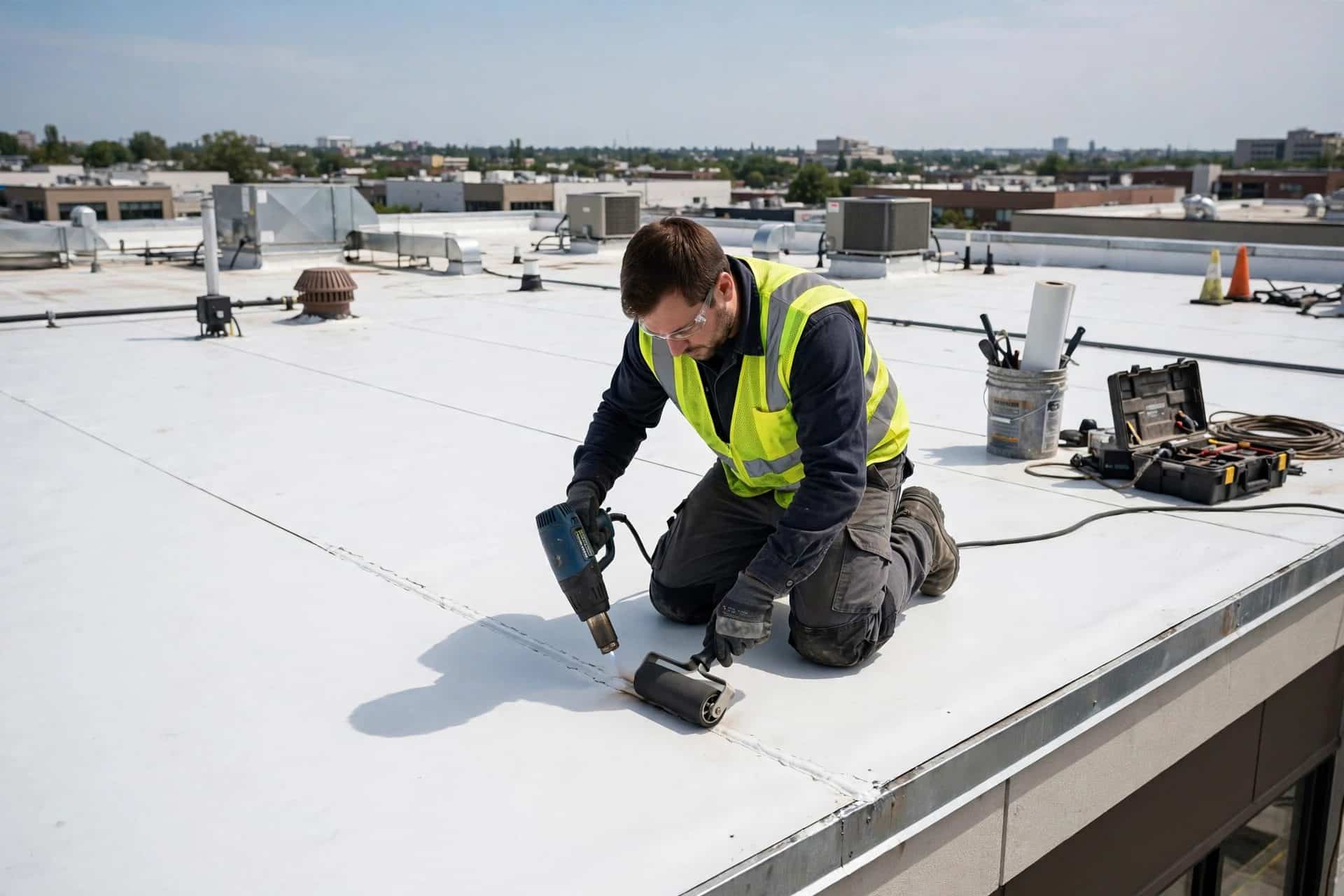
Welding TPO is simple in concept and unforgiving in practice. You are fusing two thermoplastic sheets with hot air and pressure so they become one watertight layer. There is no glue to forgive sloppy technique. If you have never welded before, the learning curve is one or two days of deliberate practice — not weeks — but only if you test your welds instead of trusting your eyes. This guide covers hand welders (detail work, repairs, flashings) and automatic welders (long straight runs), in that order.
If you are still deciding whether TPO is the right membrane for the job, our TPO vs EPDM comparison breaks down the tradeoffs. For more roofer-focused guides, see our For Roofers hub.
Always start with a test weld
As the WeatherBond PRO TPO welding guide puts it, “test welds should be performed at the start of work each morning and afternoon using like material over the same substrate” — because ambient temperature, wind, and membrane temperature change through the day, and your morning settings will not be your afternoon settings. Take a piece of scrap membrane, weld a short seam, let it cool for at least 10–30 minutes, then cut a 1-inch-wide strip across the weld and peel it apart by hand.
An acceptable weld, per GAF’s technical bulletin C-39 on test-welding thermoplastic membranes, tears through the film — the scrim reinforcement gets exposed, called a “film tearing bond” (FTB) — and the welded area is 1 to 1.5 inches wide. A partial weld separates between the layers in spots; a cold weld peels apart cleanly like it was never heated. If your test strip peels between layers, change ONE setting and test again. Retest whenever the weather shifts or you change substrates. This costs you five minutes and saves you callbacks.
Set your welder right — and clean the seam first
For a hand welder on reinforced TPO membrane, field practice puts the heat at 950–1050°F — roughly dial #7–8 depending on weather and membrane thickness — with the airflow high enough to carry the heat into the seam. For nonreinforced TPO flashing, dial it down to #5–6; flashing is thinner and melts faster. Automatic welders run around 1000°F (#8) at an initial speed of 12.5 feet per minute, with air at 100%, per WeatherBond’s PRO TPO welding guide — and Versico’s published field settings guide lists essentially the same baseline: 1004°F, 12.5 feet per minute.
Those are starting points, not gospel. Colder mornings need slower speed or more heat; hot afternoons on sun-baked membrane need the opposite. Adjust one variable at a time — never heat and speed together, because then you never learn what fixed the weld.
Before any heat touches the membrane, clean the seam area. Wipe with a mild detergent first if it is dirty, then use xylene for TPO (acetone for PVC) and let it flash off completely before welding. A small amount of cleaner does the job; flooding the seam can affect the weld itself. Contamination is the quiet killer of welds — dust, dew, or fingerprints between the sheets will not be visible, but the peel test will find them.
Probe every seam after it cools
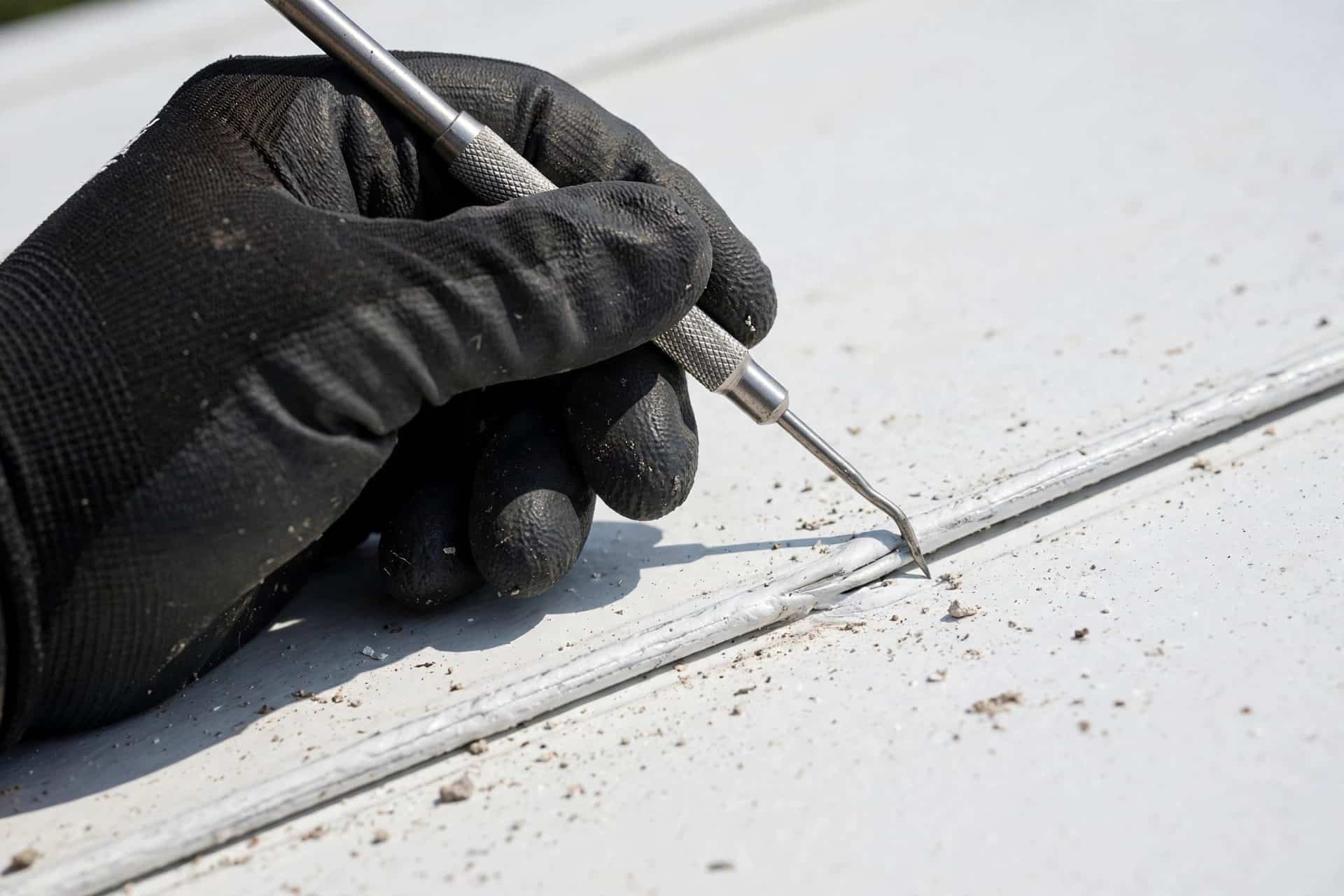
Once a seam is welded and fully cooled, probe the entire length. Run a rounded seam probe along the leading edge of the weld with steady pressure, feeling for voids, skips, and fishmouths — any spot where the probe slips in between the layers instead of gliding over a fused edge. Manufacturers require this for a reason: commercial TPO specs call for probing seams to detect marginal bonds, voids, skips, and fishmouths, because the warranty depends on it.
Every defect you find gets repaired with a patch of reinforced membrane welded around the entire area — not a dab of caulk, and not re-welding over a dirty failed spot. T-joints and cross seams (where three sheets meet) get patches by default; the thickness change there makes them the most leak-prone spots on the roof.
The three beginner mistakes that make cold welds
First: too cold. If the weld peels apart between the layers — a clean separation, no tearing — the heat never got into both surfaces. Slow down or raise the temperature. Second: too hot. If the membrane discolors, glazes, or starts to flow out from the weld edge, back the heat off or speed up. A weld wider than 1.5 inches can actually fail over time, per GAF’s guidance — more heat is not more strength. Third: welding dirty. Dust, moisture, or dew between the sheets makes voids you cannot see until the probe finds them or the roof leaks. Clean the seam, and don’t weld wet membrane — wait for it to dry.
Get these three right and the rest is repetition: clean, heat, roll with pressure, probe, move on.
What temperature do you weld TPO at?
Hand welders typically run 950–1050°F (dial #7–8) for reinforced TPO membrane and lower (#5–6) for thinner flashing. Automatic welders run around 1000°F at 12.5 feet per minute. Treat these as starting points and confirm with a test weld each morning and afternoon, since ambient conditions change them.
How do you test a TPO seam?
Weld a sample on scrap membrane, let it cool 10–30 minutes, cut a 1-inch strip across the weld, and peel it apart. A good weld tears through the film (film tearing bond) with a 1–1.5 inch wide welded area. On the installed roof, probe every cooled seam with a seam probe to catch voids, skips, and fishmouths.
How wide should a TPO weld be?
The welded area should be 1 to 1.5 inches wide. Wider is not better — GAF’s test-welding bulletin notes that welds wider than 1.5 inches can be a sign of excessive heat and may fail over time.
Safety note: heat welders operate at around 1000°F — keep the nozzle moving, wear heat-resistant gloves, and never weld near open-flame restrictions without checking the building’s fire watch rules. Always follow the membrane manufacturer’s current published specs; they override any general guide.
Spanish version: Cómo soldar una membrana TPO: guía completa para principiantes.
Leave a Reply