
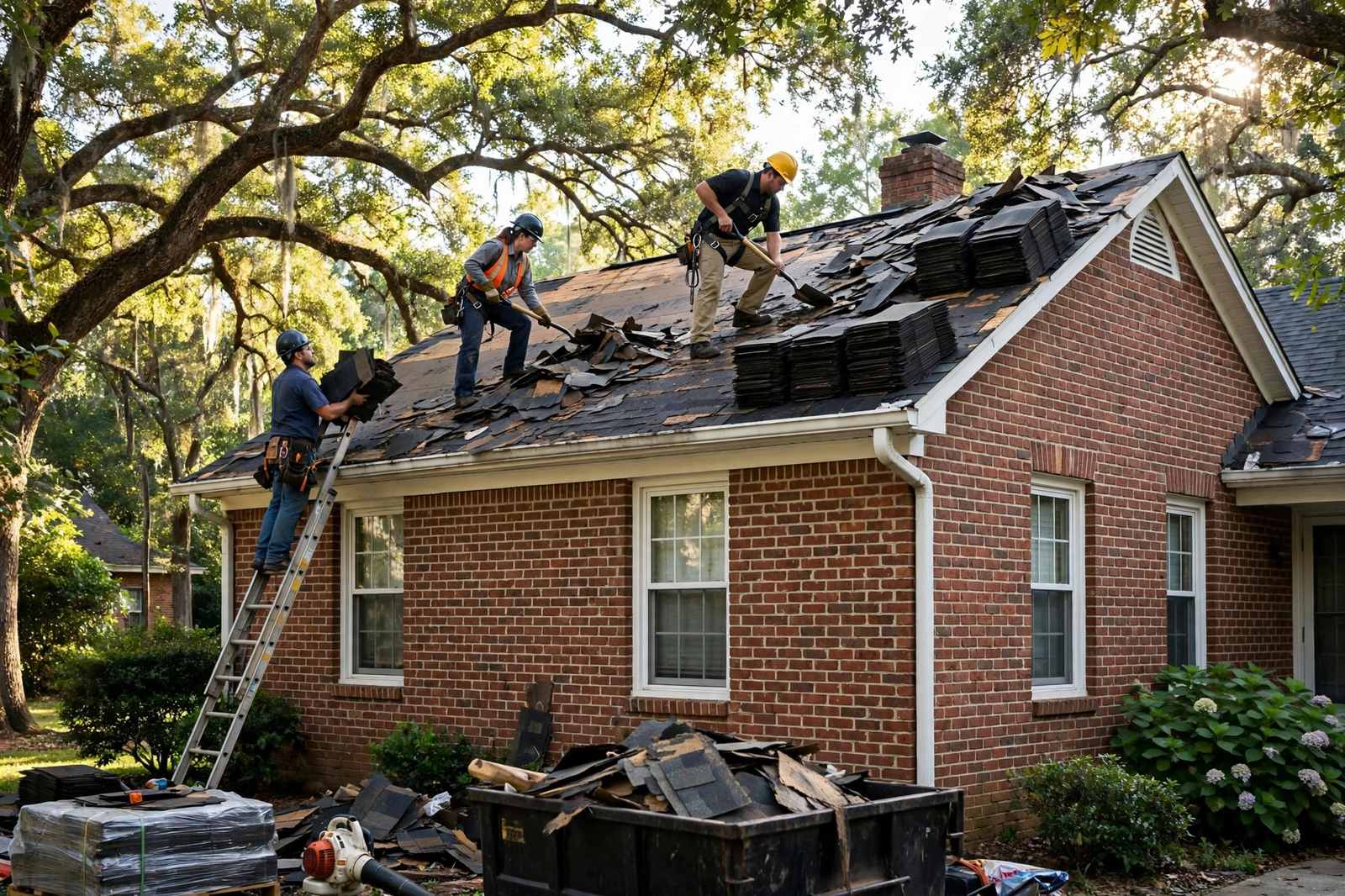
In Georgia, most homeowners pay about $8,100 to $15,800 for a full roof replacement with architectural asphalt shingles on a typical 2,000-square-foot roof surface in 2026 — roughly $4.05 to $7.90 per square foot installed, about 10% below the national average. Class 4 shingles and metal run higher.
That discount is real, but it comes with a trade: spring hail in the north, tropical systems in the south, and humidity everywhere in between. I ran a 15-person roofing crew for years, and the honest Georgia answer is never just a statewide average — it is your material, your roof shape, and which side of the state your house sits on. Here is how the numbers actually break down.
Get your own number first: run your home through our free Roof Cost Calculator with Georgia preselected — it uses the same cost factor as the table below and takes about a minute.
How much does a roof replacement cost in Georgia?
A Georgia roof replacement typically costs about 10% less than the national average for the same material — labor runs lower than on the coasts, and most Georgia roofs skip the ice-barrier work snow states require.
The table below applies the Georgia regional factor of 0.90 to national installed ranges. Totals assume a 2,000-square-foot roof surface — remember, roofers price by roof surface, not living space, and your roof surface is usually 10–30% larger than your home’s floor area once pitch and overhangs are counted. Our national roof replacement cost guide explains that measurement in detail.
| Material | Cost per sq ft, installed | Total — 2,000 sq ft roof | Typical lifespan |
|---|---|---|---|
| 3-tab asphalt shingles | $3.15–$5.85 | $6,300–$11,700 | 15–20 years |
| Architectural asphalt shingles | $4.05–$7.90 | $8,100–$15,800 | 20–30 years |
| Class 4 impact-resistant shingles | $4.30–$7.35 | $8,600–$14,700 | 25–30 years |
| Metal — exposed-fastener panels | $6.30–$10.80 | $12,600–$21,600 | 30–45 years |
| Metal — standing seam | $9.00–$14.40 | $18,000–$28,800 | 40–70 years |
| Clay or concrete tile | $9.00–$16.20 | $18,000–$32,400 | 50+ years |
Most Georgia homeowners choose architectural shingles: they cost only modestly more than 3-tab and stand up to wind, hail, and heat better. If you are deciding between the two, our architectural vs 3-tab shingles comparison breaks down the lifespan and warranty math. In the Atlanta hail belt, Class 4 shingles are worth pricing too. Metal suits long-term homeowners; tile is uncommon in Georgia and heavy — your structure may need reinforcement, not included in the range above.
What drives roof replacement cost in Georgia?
Hail, hurricane wind, and humidity drive Georgia roof costs more than labor does — the same house can price very differently in Marietta, Macon, and Valdosta.
Hail and severe thunderstorms: north Georgia and metro Atlanta
North Georgia and the Atlanta metro sit in the state’s heaviest severe-weather zone: NOAA/NWS climatology puts the NWS Atlanta forecast area at roughly 30–40 severe thunderstorm days a year, with large hail on about 7 days a year on average — peaking in April, mostly in the northern and central parts of the state. That is why Class 4 impact-resistant shingles — the highest UL 2218 rating, typically 10–20% more installed — are worth pricing in the northern half of the state. Ask your insurer exactly what a documented Class 4 roof earns on your policy: some carriers discount the wind/hail portion, but only with the invoice and manufacturer paperwork. And if a storm just hit your neighborhood, walk through our storm damage roof checklist before you call anyone.
Hurricane and tropical-storm wind: south Georgia
South Georgia takes the tropical hits: Hurricane Helene’s eye passed near Valdosta in September 2024, tearing roofs across the region — the third storm to hit the area in just over a year, after Hurricane Idalia damaged an estimated 1,000 homes in Valdosta and Lowndes County. South of Macon, wind rating matters as much as price: look for shingles with 110–130 mph ratings installed to the manufacturer’s high-wind nailing pattern — usually six nails per shingle and sealed starter strips. Near the coast, specify corrosion-resistant flashing.
Humidity, algae, and attic heat: everywhere in Georgia
The black streaks on roofs across Georgia are blue-green algae (Gloeocapsa magma), which thrives in humidity — GAF notes the problem is much worse in high-humidity regions, where streaks can appear within a few years. The fix is built into the shingle: copper-infused granules that inhibit the algae, backed by 25-year algae-discoloration warranties on most major architectural lines — ask for them by name, since most lines charge little extra. And do not forget the attic: Georgia summer heat cooks shingles from underneath, so a proper quote should include ridge or other ventilation work, not just shingles.
What Georgia roofs usually do NOT need
Unlike snow-belt states, most of Georgia does not require ice-and-water shield along the eaves for ice dams. Good roofers still use it in valleys and around penetrations — but a large line item for full eave ice barrier in Atlanta or Columbus deserves a question.
Do you need a permit to replace a roof in Georgia?
Usually yes — and Georgia also puts a license requirement on the contractor that most homeowners do not know about.
First, permits: the City of Atlanta generally requires a building permit for a roof replacement, and most larger Georgia cities and counties do too — though some suburbs, like Johns Creek, exempt simple like-for-like re-roofs while requiring permits for structural changes. Confirm with your city or county before work starts; a legitimate contractor pulls the permit in their own name.
Second, licensing: Georgia has no roofing-specific license, but state law (OCGA § 43-41-2) requires anyone doing residential work over $2,500 to hold a Residential-Basic or Residential-Light Commercial license from the Georgia State Licensing Board — and every full replacement clears that threshold. Ask for the license number and verify it on the Secretary of State’s license search: it is the fastest way to filter out storm chasers. Then verify the liability insurance certificate with the carrier, get the scope in writing, and never pay in full up front.
How to keep a Georgia roof replacement affordable
The cheapest Georgia roof is a properly installed architectural or Class 4 shingle roof on itemized quotes — not the lowest post-storm bid.
- Get three itemized quotes with the same scope: material line, tear-off layers, decking rate per sheet, flashing, ventilation, and disposal — all spelled out.
- Price the Class 4 upgrade, then call your insurer: ask what discount that specific roof earns on your policy first — in the hail belt the math can surprise you.
- Make algae protection standard, not an upgrade: most architectural lines include copper-granule algae warranties at little to no extra cost — but only if you ask for it by name.
- Budget a decking allowance: humidity and past leaks leave some decks with soft sheets that only show at tear-off. A fair contract states the per-sheet price in advance (commonly $70–$100 per sheet installed nationally).
- Time it if you can, and check your number before you sign: if your roof is not actively leaking, scheduling outside the post-storm rush means calmer pricing — then compare any quote against the Georgia roof cost calculator; a bid far outside the range for your material needs an explanation, line by line.
Frequently asked questions
How much does a roof replacement cost in Georgia?
Most Georgia homeowners pay about $8,100 to $15,800 for architectural asphalt shingles on a typical 2,000-square-foot roof surface in 2026 — roughly $4.05 to $7.90 per square foot installed. Class 4 shingles run $8,600 to $14,700, metal $12,600 to $28,800, and tile $18,000 to $32,400. Steep, complex, or storm-damaged roofs cost more.
Do you need a permit to replace a roof in Georgia?
Usually yes: the City of Atlanta and most larger cities and counties require a building permit for a full roof replacement, though some suburbs exempt simple like-for-like re-roofs. Georgia also requires the contractor to hold a state Residential-Basic or Residential-Light Commercial license for jobs over $2,500.
Are Class 4 impact-resistant shingles worth it in Georgia?
In the northern half of the state, often yes. Class 4 shingles cost about 10–20% more than standard architectural shingles, carry the highest UL 2218 impact rating, and stand up to the hail that hits metro Atlanta and north Georgia most springs. Whether they pay back through insurance depends on your carrier — ask about the discount for a documented Class 4 roof first.
How long does a roof last in Georgia?
An architectural asphalt roof typically lasts 20–30 years in Georgia — toward the lower end with poor attic ventilation, since summer heat ages shingles from below. Black algae streaking can also make a roof look old before it wears out, so choose algae-resistant shingles. Metal commonly lasts 40–70 years and tile 50+ years. Good attic ventilation is the cheapest way to protect whatever roof you buy.
Disclaimer: these 2026 Georgia ranges are national installed pricing adjusted by a Georgia regional factor (0.90). Actual costs vary by city, roof size, pitch, complexity, and material availability — always get local written quotes.
Leave a Reply