
Key takeaways
- Most residential roof replacements take 1–3 days of actual work: 1 day for a simple shingle roof, 2–3 for larger or more complex ones.
- The roofing itself is rarely the slow part — weather, rotted decking, and permit or inspection delays cause most timeline overruns.
- Metal standing-seam installations typically run 3–5 days and clay or concrete tile 5–10; asphalt shingles are the fastest residential option.
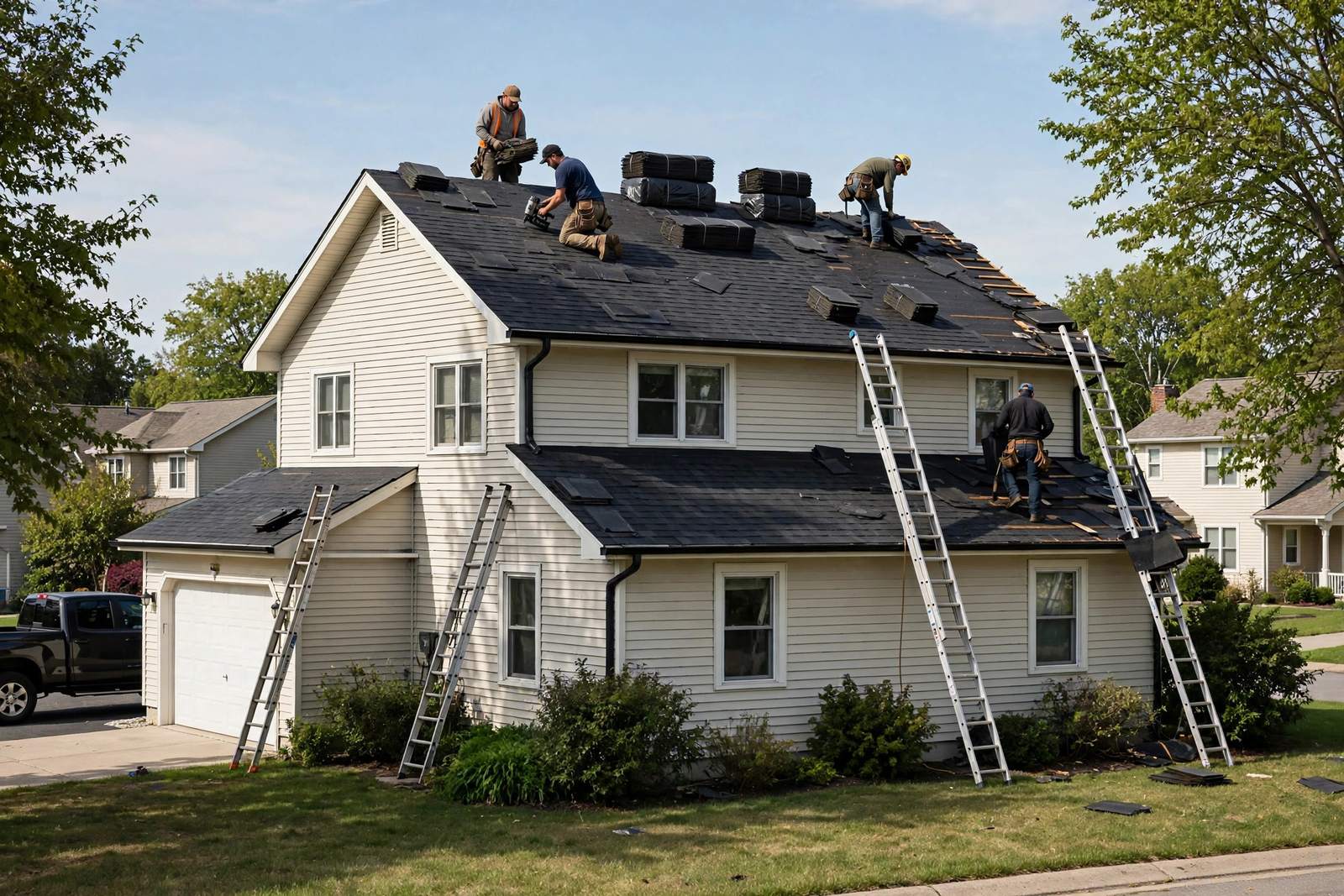
Most residential roof replacements take 1–3 days of actual work. A simple shingle roof on a typical 1,500–2,500 square-foot home is usually a 1-day job; an average home takes 2 days; large, steep, or complex roofs stretch to 3. That’s the crew’s time on your roof — not the weeks of permits, material ordering, and scheduling around it.
I supervised a 15-person roofing crew for years, and “how long will this take?” is the first question every homeowner asks after the price. Here’s the honest answer: the roofing itself is usually the fastest part of the whole project. What makes replacements feel long is everything around it — the permit, the material delivery, the adjuster visit, the weather. This is the realistic day-by-day timeline, what makes jobs run long, and how to keep yours on track.
How long does a roof replacement take?
For the most common job in American roofing — tearing off asphalt shingles and installing new ones on a single-family home — expect 1–3 days of actual work, weather permitting. Contractor-published timelines converge on that range for homes in the 1,500–2,500 square-foot range, and it matches what I saw in the field: a good crew with a simple roof can strip and re-roof in a single long day.
Here’s how the timeline breaks down by what you’re dealing with:
- Simple shingle roof (one-story, easy pitch, few valleys): 1 day. Tear-off in the morning, shingles on by afternoon, cleanup before dinner.
- Average shingle roof (two stories, moderate pitch, a few valleys or a chimney): 1–2 days. Most residential jobs land here.
- Large or complex shingle roof (3,000+ square feet, steep pitch, skylights, dormers): 2–3 days.
- Standing-seam metal: 3–5 days. Panels are cut and seamed on site, and precision takes time.
- Clay or concrete tile: 5–10 days. Heavier material, more labor per square foot, sometimes structural reinforcement first.
- Wood shake: 3–4 days — slower than shingles, faster than tile.
Two things shift you toward the longer end before the crew even arrives: the material and the number of existing layers. Tearing off two old layers of shingles (the most most building codes allow — three layers means a full strip before anything else) adds roughly half a day of pure demolition. And on material, metal’s premium isn’t just money — it’s calendar. If you’re weighing the tradeoffs, our metal roof vs asphalt shingles comparison covers the full cost-versus-lifespan math behind that longer install.
The same factors that drive your timeline — size, pitch, complexity — also drive the price. Our complete 2026 roof replacement cost guide breaks down what those factors mean for your quote, so you can see timeline and budget in one picture.
Roof replacement day by day: what actually happens
Here’s the sequence a professional crew follows, from the day the materials land to the final walk-through. Most of this is invisible to you inside the house — you’ll hear it more than see it.
The day before: delivery and setup. Shingle bundles, underlayment, flashing, and vents get delivered — usually stacked on the roof itself or on pallets in the driveway. The dumpster or dump trailer arrives. A good crew chief walks the property, decides where tarps go over landscaping, and confirms where the dumpster will sit. Move your cars out of the driveway that evening; the delivery truck and dumpster need the space.
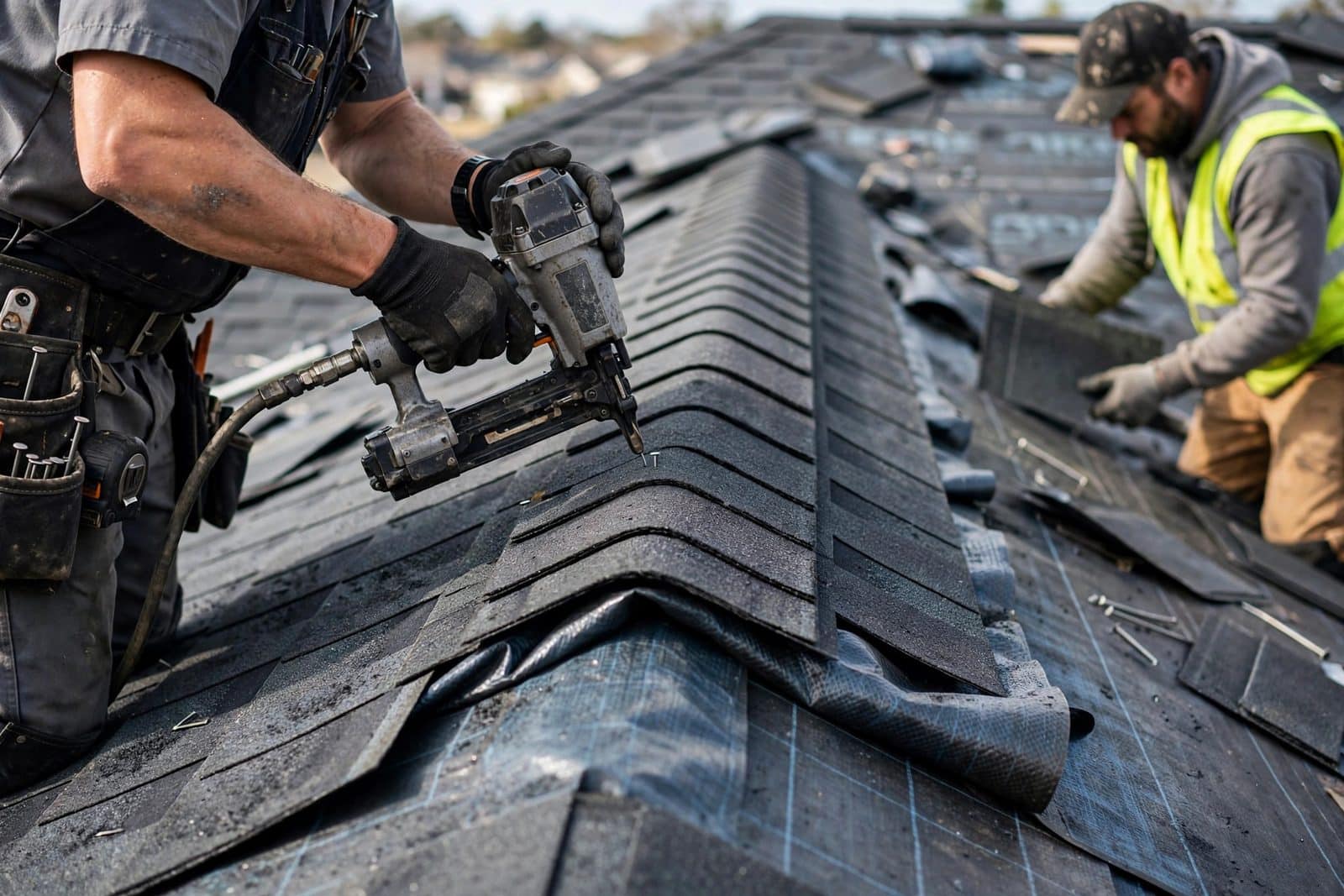
Day 1: tear-off and deck inspection. This is the loud day. The crew strips every old shingle down to the wood deck, then walks every sheet of plywood looking for rot, soft spots, and delamination. Bad decking gets cut out and replaced — usually 4×8 sheets of plywood or OSB — and this is where “it’ll take one day” quotes go to die, because nobody knows the deck’s condition until it’s exposed. Flashing gets pulled, drip edge comes off, and by end of day the roof is either dried-in with underlayment or, on fast crews, already partway into new shingles.
Day 2: dry-in and shingles. Underlayment goes down first — synthetic underlayment on most jobs today (felt is the budget option) — plus ice-and-water shield in valleys, around penetrations, and along eaves where code requires it. New drip edge, new flashing around chimneys and walls, then shingles course by course from the eave up. Ventilation gets installed or upgraded: ridge vent, box vents, or whatever your attic needs. Most average-size jobs finish all of this on day 2.
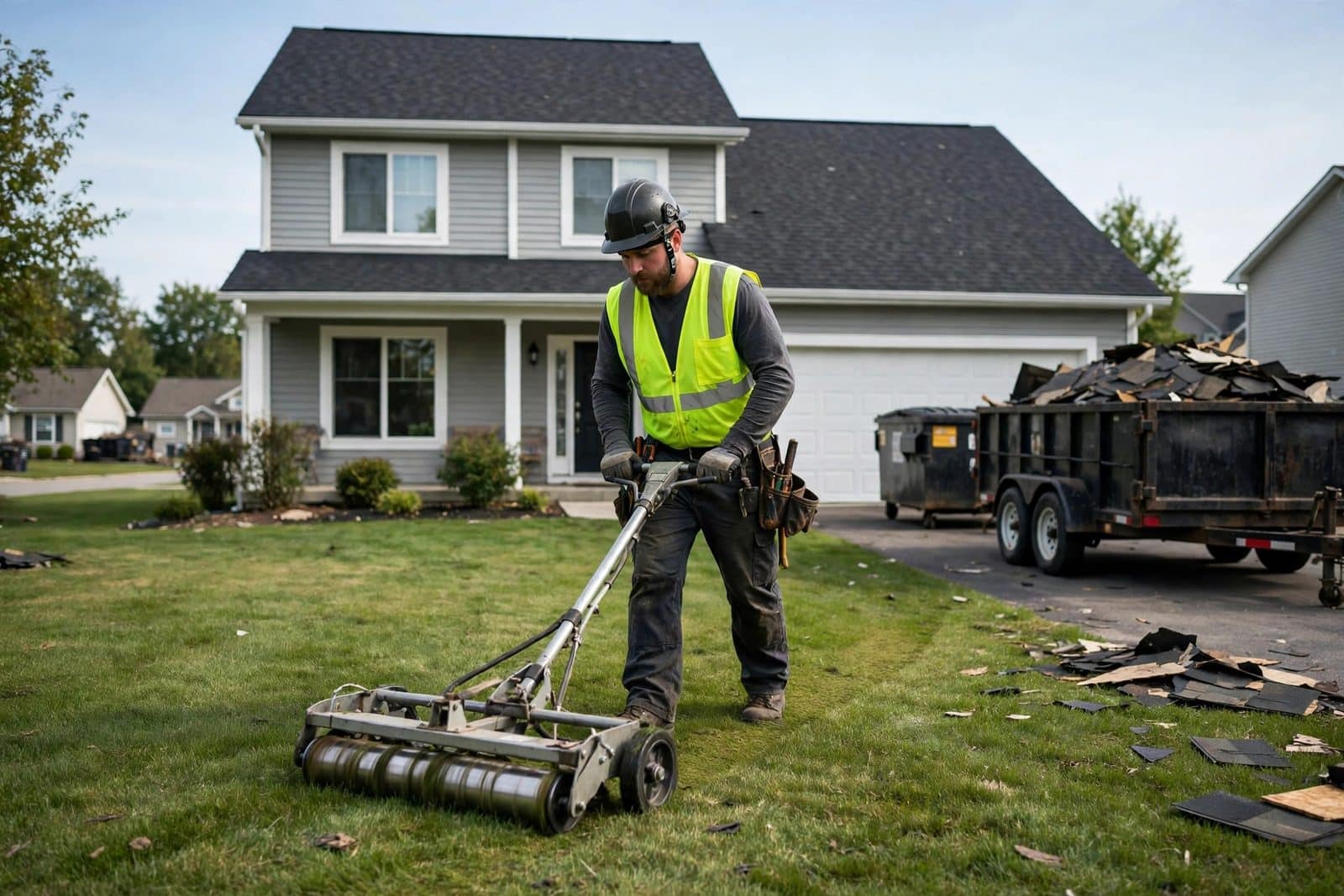
Day 3 (when needed): finish and cleanup. Ridge caps, final ventilation details, punch-list items from the crew chief’s walk. Then cleanup: every scrap picked up, gutters cleared of granules, and a magnetic roller swept across the lawn and driveway — twice, if the crew is worth hiring. The crew chief should do a final walk-through with you before the dumpster leaves. If anyone rushes this step, that’s a red flag about every other step.
What makes a roof replacement take longer than expected
Almost every roof replacement that runs long goes long for one of these reasons — and in my experience, the installation itself is almost never the culprit.
Weather. Rain stops roofing, full stop. Working on a stripped roof in rain is gambling with your house, and any contractor who does it anyway is someone to fire, not praise. High winds make it unsafe to carry materials and can tear underlayment loose; extreme heat slows crews down for safety reasons (this is real in places like Texas, where summer days routinely shut down afternoon work). A professional estimate builds in modest weather contingency rather than promising a finish date no one can guarantee.
Rotted or damaged decking. Replacing a couple of bad plywood sheets adds an hour or two. Finding widespread rot, sagging rafters, or water-damaged decking across half the roof adds a full day — and material cost nobody quoted, because nobody could see it. This is the single most common reason 1-day quotes become 2-day jobs.
Material choice. As covered above, metal and tile installations simply take more days than shingles. Standing-seam panels are custom-cut and mechanically seamed on your roof; there’s no way to rush precision.
Roof complexity. Steep pitch slows everything — every bundle carried up is harder, every step is slower, and safety setup takes longer. Skylights, chimneys, dormers, and wall intersections each add hours of flashing detail work. A cut-up roofline with four valleys takes meaningfully longer than a simple gable of the same square footage.
Crew size. This is the question homeowners never ask: how many people will actually be on my roof? A six-person crew can do in a day what a three-person crew does in two. Ask the estimator for the crew size in writing — a “1-day job” with three people is a 2-day job with math.
Permits and inspections. Most jurisdictions issue a straightforward re-roof permit in 1–3 business days; some do it same-day over the counter. But in wind-borne debris regions — Florida’s High-Velocity Hurricane Zone, the Texas coast — mid-project or final inspections are stricter and scheduling the inspector can add days. And if your replacement follows a storm, the calendar gets hijacked by the insurance process: adjuster visits, documentation, and approvals can add days or weeks before work even starts. Texas homeowners dealing with the recent hail rounds can see how the state’s hail and insurance picture interacts with pricing in our Texas roof replacement cost guide.
The part nobody puts in the quote: the weeks before and after
The crew’s 1–3 days are the middle of the project, not the whole thing. From signing the contract to the final inspection, a typical residential replacement spans 2–4 weeks — sometimes longer. Here’s where that time goes.
Material lead time. Standard architectural shingles are usually on your roof within 1–2 weeks of ordering. Specialty colors, designer shingles, and standing-seam metal (often fabricated to your roof’s measurements) can take 2–4 weeks or more. This is the hidden timeline driver for metal jobs: the install takes 3–5 days, but the wait for materials takes a month.
Permits. As above, usually 1–3 business days — but ask your contractor to confirm for your specific city or county. Some HOAs add their own approval step, and HOA architectural committees are famous for meeting once a month.
The insurance process, if storm damage is involved. If your replacement is tied to an insurance claim, the adjuster has to see the damage before it’s torn off. Document everything with dated photos before the crew strips anything — once the old shingles are in the dumpster, your evidence is gone. Our storm damage checklist walks through exactly what to photograph and record so the claim process doesn’t stall your timeline.
The final inspection. Municipal final inspection usually happens within a few days after the crew finishes. The inspector checks flashing, ventilation, and fastener patterns, and once it passes you get documentation that the work meets code — a record worth keeping for insurance and future resale. Then comes the paperwork that matters to you: the manufacturer warranty registration and the contractor’s workmanship warranty in writing. And one homeowner tip: check your attic after the first hard rain. That’s the real final inspection.
When to schedule: the timing that saves you money and days
Late fall through winter is historically the best window to replace a roof — better contractor availability, and often better pricing. Distributors applied material price increases in mid-2026 (shingles up as much as 9%, accessories 10–12% per industry reporting), and the October–February stretch is when contractors have the most open schedule and the least pricing pressure. Spring is the industry’s rush season; everyone wants their roof done in April, and prices and wait times reflect it.
Summer works but has two costs: crews slow down in extreme heat (a safety reality, not laziness), and pop-up afternoon storms in many regions can eat a workday. Winter is more roof-friendly than most homeowners assume — shingles install fine in cold weather, though the adhesive seal strips need sun and warmth to fully bond, so good crews hand-seal shingles in cold conditions and schedule accordingly.
One scheduling rule from the field: don’t book your install for the week a major storm system is forecast. Your contractor should be watching the weather too — if they schedule a tear-off with a hurricane remnant three days out and no contingency plan, that’s useful information about how they run jobs.
FAQs
Can you live in your house during a roof replacement?
Yes — most families stay home through the whole job. The real issue is noise: tear-off day sounds like someone dropping furniture on your ceiling from 7 a.m. on, and nail guns run all day. If you work from home, plan to be elsewhere on day 1. Keep pets somewhere calm and away from the work zone, and expect the crew to need access to outdoor outlets and your driveway.
How long does a roof replacement take on a 2,000 sq ft house?
Usually 1–2 days for asphalt shingles. A 2,000-square-foot roof surface with a straightforward layout is a classic 1-day job for a full crew; add a second day if the pitch is steep, the layout is cut up, or the tear-off reveals decking repairs.
Can a roof be replaced in the rain?
No — and you don’t want it to be. Rain turns a stripped roof into a leak, makes the deck dangerously slippery, and compromises how underlayment and shingles adhere. Reputable contractors stop work when rain starts and cover any exposed decking with tarps. A contractor who keeps installing through steady rain is cutting corners on your house.
How long does it take to replace a metal roof?
Typically 3–5 days for standing-seam metal on a residential home — longer than the 1–3 days for shingles, because panels are cut and mechanically seamed on site. Add 2–4 weeks of material lead time before installation day, since standing-seam panels are often fabricated to your roof’s measurements.
Does a roof replacement make a mess inside the house?
It can rattle things. Tear-off and nailing vibrate the whole structure — take pictures and fragile items off walls, and cover anything stored in the attic with tarps or sheets, because dust and small debris filter down during tear-off. The noise is the main disruption; actual interior damage from a competent crew is rare.
Last updated: October 2026
Disclaimer: timeline and cost ranges vary by region, roof complexity, weather, and material — get local quotes for your specific project.
Leave a Reply