
In Texas, most homeowners pay about $7,600 to $13,300 for a full roof replacement with architectural asphalt shingles on a typical 2,000-square-foot roof surface in 2026 — roughly $3.80 to $6.65 per square foot installed, slightly below the national average. Metal, tile, and hail upgrades push the total higher, and steep or cut-up roofs in Dallas–Fort Worth, Houston, and Austin usually land at the top of the range.
That Texas discount is real, but it is shrinking. Material prices rose through 2025 and again in 2026, and Texas adds its own pressures: hail in the north and center of the state, hurricane wind on the Gulf Coast, and brutal summer heat everywhere. I ran a 15-person roofing crew for years, and the honest Texas answer is never just a statewide average — it is your material, your roof shape, and your storm exposure. Here is how the numbers actually break down.
Get your own number first: run your home through our free Roof Cost Calculator with Texas preselected — it uses the same Texas cost factor as the table below and takes about a minute.
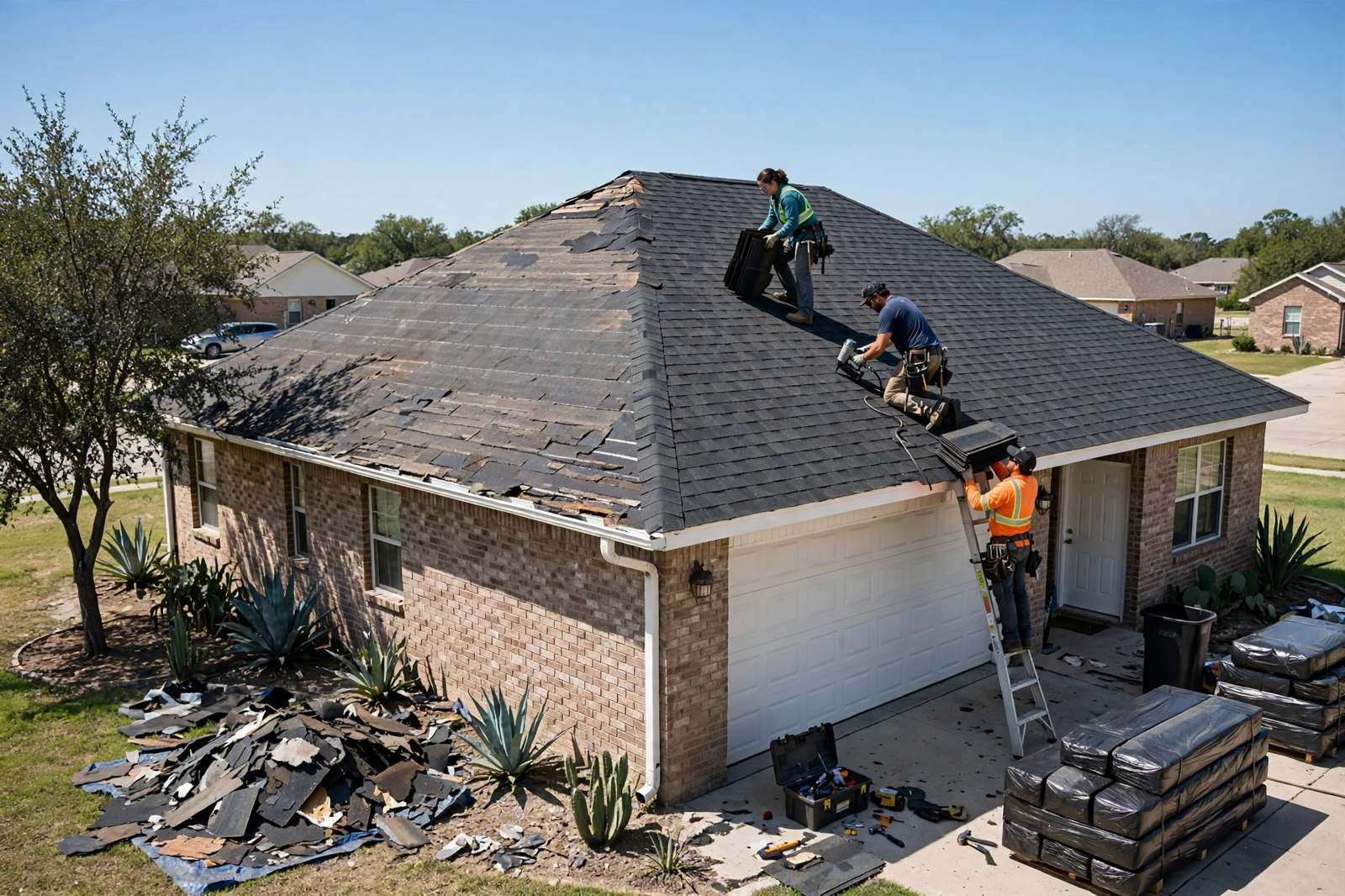
How much does a roof replacement cost in Texas?
A Texas roof replacement typically costs about 5% less than the national average for the same material, because labor rates outside the biggest metros run lower and most Texas roofs do not need the ice-barrier work required in snow states.
The table below starts with national installed ranges and applies the Texas regional factor of 0.95, rounded to clean ranges. Totals assume a 2,000-square-foot roof surface — remember, roofers price by roof surface, not living space, and your roof surface is usually 10–30% larger than your home’s floor area once pitch and overhangs are counted. Our complete national roof replacement cost guide explains that measurement in detail.
| Material | Texas cost per sq ft (installed) | Typical total — 2,000 sq ft roof | Typical lifespan in Texas |
|---|---|---|---|
| 3-tab asphalt shingles | $3.80–$5.70 | $7,600–$11,400 | 15–20 years |
| Architectural asphalt shingles | $3.80–$6.65 | $7,600–$13,300 | 20–30 years |
| Class 4 impact-resistant shingles | $4.50–$7.75 | $9,000–$15,500 | 25–30 years |
| Metal — exposed-fastener panels | $6.65–$11.40 | $13,300–$22,800 | 30–45 years |
| Metal — standing seam | $9.50–$15.20 | $19,000–$30,400 | 40–70 years |
| Clay or concrete tile | $9.50–$17.10 | $19,000–$34,200 | 50+ years |
Most Texas homeowners choose architectural shingles, and for good reason: they cost only slightly more than 3-tab and handle wind and heat better. If you are deciding between those two, our architectural shingles vs 3-tab shingles comparison breaks down the lifespan and warranty math. Tile is common in South and Central Texas Spanish-style homes, but it is heavy — your structure may need reinforcement, which is not included in the range above.
What drives roof replacement cost in Texas?
Hail, heat, and hurricane wind drive Texas roof costs more than labor does — the same house can price very differently in Amarillo, Dallas, and Houston.
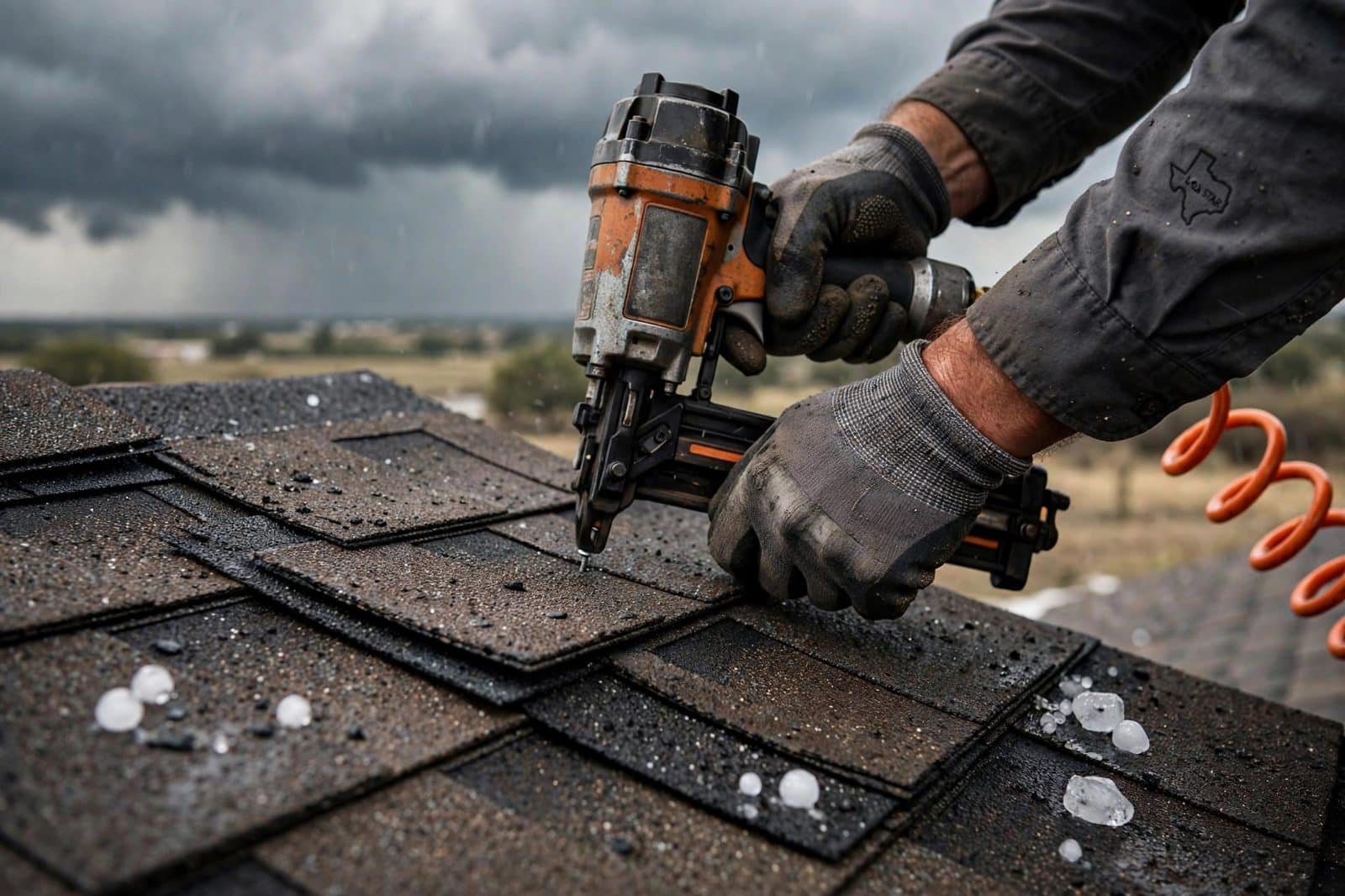
Hail country: North and Central Texas
Texas leads the nation in hail claims, and the Dallas–Fort Worth corridor sits in the worst of it. That is why Class 4 impact-resistant shingles — the highest UL 2218 rating — are close to standard in North Texas. They cost roughly 10–20% more than standard architectural shingles installed, but Texas insurers are required to offer premium credits for qualifying impact-resistant roofs, and many carriers discount the wind/hail portion of the premium by roughly 15–35% when you document the Class 4 installation. Keep the invoice and manufacturer paperwork: no documentation, no discount. Also read the fine print — some carriers pair the discount with a cosmetic-damage exclusion, meaning dents that do not crack the shingle may not be paid later.
Heat: everywhere in Texas
A Texas attic can cook shingles from underneath all summer. Poor ventilation shortens an asphalt roof’s life noticeably in this state, so a proper Texas quote should include ridge or other ventilation work, not just shingles. Light-colored and reflective shingle options also make a real difference to attic temperatures here in a way they simply do not in cooler states.
Hurricane wind: the Gulf Coast
From Houston and Galveston down through Corpus Christi, wind rating matters as much as price. Look for shingles rated for high winds (many architectural lines carry 110–130 mph ratings when installed with the manufacturer’s high-wind nailing pattern, usually six nails per shingle and sealed starter strips). Coastal jobs may also need enhanced fastening and corrosion-resistant flashing, which adds modest cost but is not the place to cut.
What Texas roofs usually do NOT need
Unlike snow-belt states, most of Texas is not required to install ice-and-water shield along the eaves for ice dams. Many good Texas roofers still use it in valleys and around penetrations, where it earns its keep — but if a quote charges you a large line item for full eave ice barrier in, say, San Antonio, ask why.
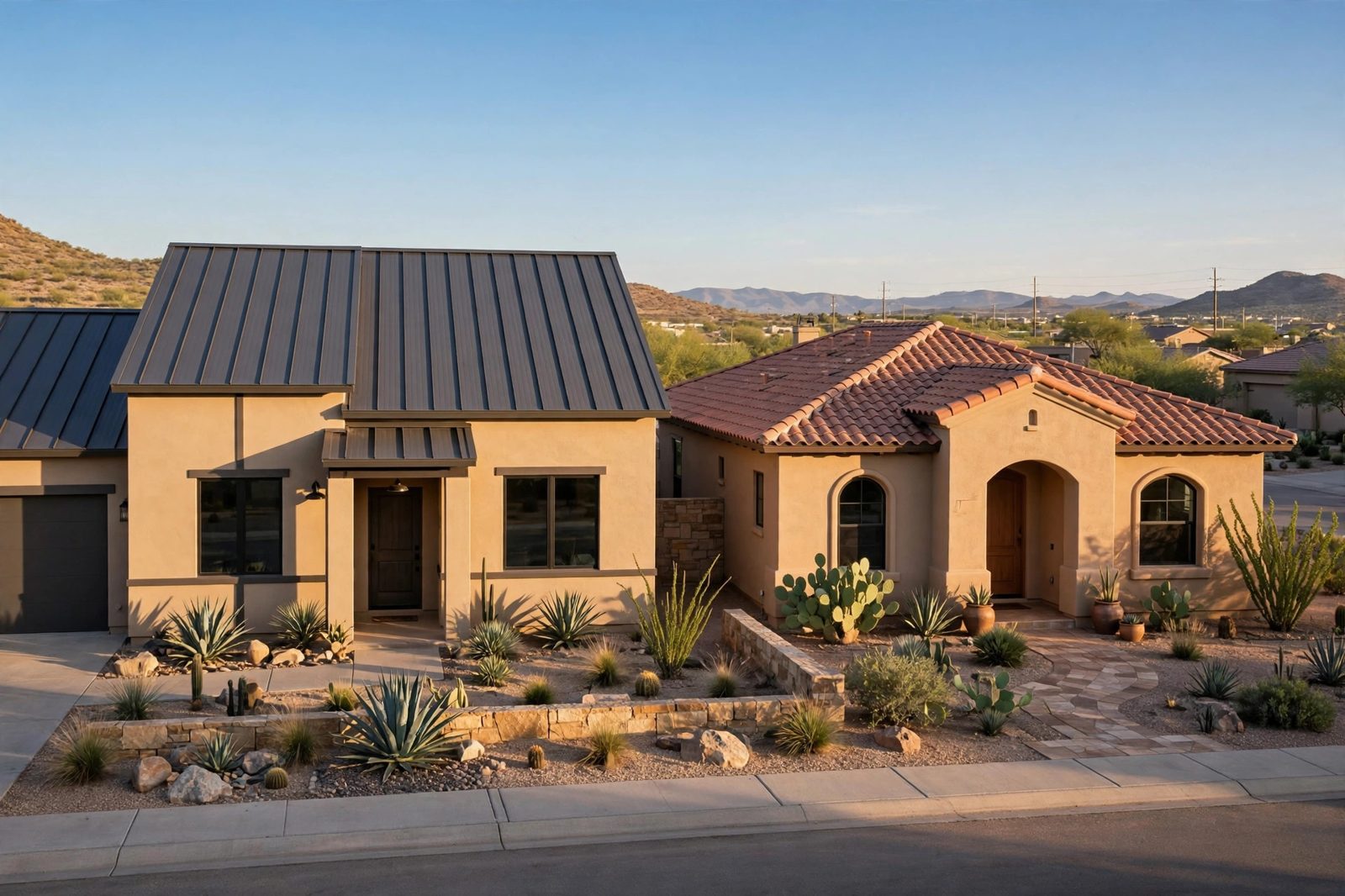
Do you need a permit to replace a roof in Texas?
In most Texas cities, yes — a roof replacement usually needs a city building permit, even though Texas has no statewide roofing license.
This surprises people, so be clear on both halves. First, permits: cities such as Dallas, Houston, Austin, San Antonio, and Fort Worth generally require a permit for a full re-roof, with fees that are usually a small part of the total job (often in the $100–$500 range nationally). Rules and whether an inspection is required vary by city and by whether you live inside city limits, so confirm with your city or county before work starts. A legitimate contractor normally pulls the permit in their own name.
Second, licensing: Texas does not currently license roofers at the state level — anyone can legally call themselves a roofer here. That makes your own vetting the real protection: verify the contractor’s liability insurance certificate directly with the carrier, check that they have a real local address and recent local reviews, get the scope in writing, and never pay the full amount up front. After a hailstorm, be extra careful with door-knockers who arrived from out of state the same week.
How to keep a Texas roof replacement affordable
The cheapest Texas roof is a properly installed architectural or Class 4 shingle roof bought on itemized quotes — not the lowest bid after a storm.
- Get three itemized quotes with the same scope: material line, tear-off layers, decking rate per sheet, flashing, ventilation, and disposal should all be spelled out.
- Price the Class 4 upgrade, then call your insurer: ask exactly what discount that specific roof earns on your policy before you decide — in hail country the discount can repay the upgrade in a few years.
- Budget a decking allowance: heat and past leaks mean some Texas decks have soft or damaged sheets that only show at tear-off; a fair contract states the per-sheet price in advance (commonly around $70–$100 per sheet installed nationally).
- Time it if you can: if your roof is not actively leaking, scheduling outside the post-storm rush gives you more contractor choice and calmer pricing.
- Check your number before you sign: compare any quote against the Texas roof cost calculator — a bid far outside the range for your material needs an explanation, line by line.
Frequently asked questions
How much does a roof replacement cost in Texas?
Most Texas homeowners pay about $7,600 to $13,300 for architectural asphalt shingles on a typical 2,000-square-foot roof surface in 2026, or roughly $3.80 to $6.65 per square foot installed. Metal roofs typically run $13,300 to $30,400 depending on the system, and tile $19,000 to $34,200. Steep, complex, or storm-damaged roofs cost more.
Do you need a permit to replace a roof in Texas?
Usually yes at the city level: most larger Texas cities require a building permit for a full roof replacement, and your contractor should pull it. Texas has no statewide roofing license, however, so always verify a roofer’s insurance, local address, and references yourself before signing.
Are Class 4 impact-resistant shingles worth it in Texas?
For most North and Central Texas homes, yes. Class 4 shingles cost about 10–20% more than standard architectural shingles, resist hail better under the UL 2218 test, and many Texas insurers offer roughly 15–35% off the wind/hail portion of your premium for a documented Class 4 roof — which can repay the upgrade within a few years. Confirm your carrier’s exact discount and any cosmetic-damage exclusion first.
How long does a roof last in Texas heat?
An architectural asphalt roof typically lasts about 20–30 years in Texas, often toward the lower end if the attic is poorly ventilated, because summer heat ages shingles from below. Metal roofs commonly last 40–70 years and tile 50+ years. Good attic ventilation is the single cheapest way to protect whatever roof you buy in this state.
Disclaimer: these are 2026 Texas ranges based on national installed pricing adjusted by a Texas regional factor (0.95) and current market reporting. Actual costs vary by city, roof size, pitch, complexity, and material availability — always get local written quotes before making a decision.
Leave a Reply