

Key takeaways
- Get three itemized quotes and compare the scope line by line — the same roof with the same shingles was quoted at $18,000 and $25,000 in the same week.
- A bid 25–40% below the others usually leaves out real work: tear-off, flashing, or decking.
- Construction material prices rose 11.2% year over year through September 2026, so a quote from last year is already out of date.
- The cheapest roof is the one you only pay for once — a bad install costs more than the discount ever saved.
How do you get the best price on a roof replacement without getting scammed? Get three itemized quotes for the exact same scope, compare them line by line, and pick the middle bid from a contractor you can verify — not the cheapest number on the page. In 2026, a full replacement on a typical house runs roughly $9,600 to $24,000 depending on size, material, and scope, and the gap between two quotes for the same roof is usually a gap in what’s included, not a gap in honesty.
I spent years on a roofing crew: the homeowner who gets burned is almost never the one who paid too much — it’s the one who signed the lowest number without reading what it left out.
Why the same roof gets quoted at $18,000 and $25,000
Two quotes can both be “real” and still be $7,000 apart. In November 2026, roofing business owners debated exactly that spread in public — same shingles, same roof, $18,000 versus $25,000 — and the honest answer is that the two bids were for two different roofs.
One bid included a full tear-off down to the deck, new synthetic underlayment, new flashing at every wall and chimney, drip edge, ridge vent, and a dumpster. The other reused the old flashing, skipped the underlayment upgrade, and left the decking as “to be determined.” Same shingle name on both pages. Very different job underneath.
The benchmarks disagree for the same reason: House Project Costs puts a complete 2026 replacement at $24,000–$32,000, while Angi’s 2026 data averages $9,611, with most homeowners paying $5,903–$13,380. Different scopes, house sizes, and regions. Your job is to make sure the three quotes you receive measure the same thing.
Step 1: Know your number before anyone knocks
Never let the first contractor set the price in your head — get a ballpark from an independent source first, so you can spot an outlier in either direction.
Run your roof through our roof cost calculator — it gives you an itemized range by material and roof size, exactly the breakdown you’ll compare bids against. If you don’t know your roof’s square footage, the instant roof measurement tool measures it from satellite imagery in a couple of minutes.
Also check the calendar. According to the NRCA’s October 2026 report, construction material prices rose 2.2% in September alone and 11.2% year over year — the largest annual jump in nearly four years — and a November 17 follow-up shows them still up 11.5% year over year. Translation: a quote from last spring is already stale. As ABC chief economist Anirban Basu put it, input prices have risen “more than 11% over the past 12 months, the largest year-over-year increase in nearly four years.”
Step 2: Get three quotes — and make them quote the same job
Three is the right number — two gives you no tiebreaker, five turns into a part-time job. But three quotes only help if all three bid on the same scope. Hand each one the same written spec:
- Tear-off: full removal down to the deck, including how many layers are coming off. Two layers cost more to remove and dispose of than one.
- Decking: inspection named in writing, with a per-sheet replacement price. Rot is invisible until tear-off, and an open-ended decking line is where surprise charges live.
- Underlayment: synthetic underlayment named by brand, plus ice and water shield at eaves and valleys.
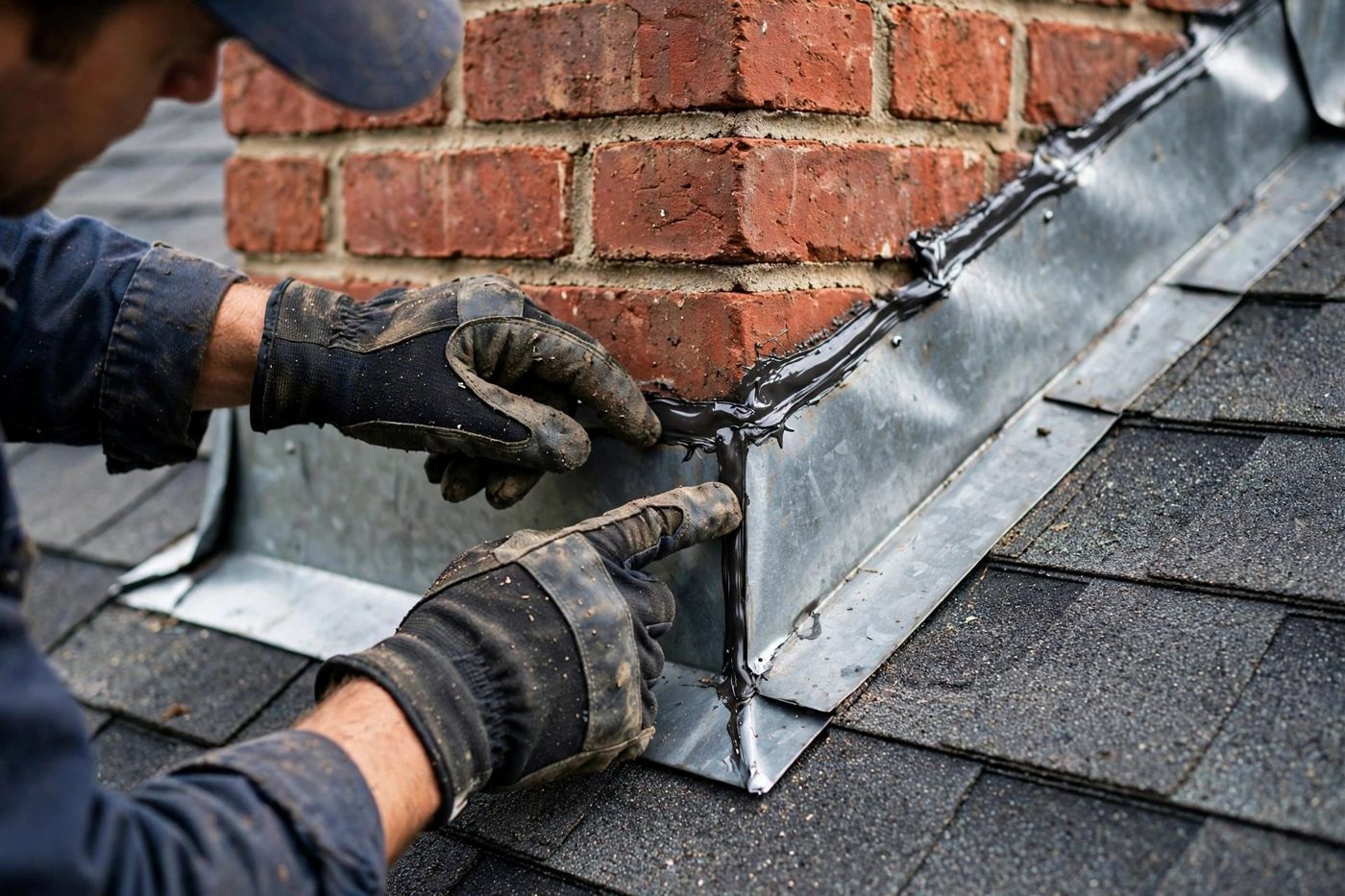
- Flashing: new flashing at every wall, chimney, and penetration — not reused. Flashing causes most roof leaks, and it’s the most commonly skipped item in a cheap bid.
- Drip edge, starter strip, ridge cap, and ventilation: small lines that are cheap to include and expensive to add later.
- Shingles by name: manufacturer, product line, and color — “architectural shingles” alone is not a spec. Our GAF vs Owens Corning vs CertainTeed comparison explains what actually differs between the big brands.
- Permits, cleanup, and disposal: dumpster, magnetic nail sweep, and haul-away in writing.
- Warranty: manufacturer warranty and workmanship warranty as two separate lines, with the years stated.
If a contractor won’t put it in writing, that tells you what you need to know. A good estimate has twelve or more line items; a one-page quote with a single number cannot be checked, compared, or challenged.
Step 3: Compare scope first, totals second
Put the three quotes side by side — one row per line item, one column per contractor. A bid landing 25–40% below the others typically omits labor-heavy work like tear-off or flashing replacement, or hides it behind vague language.
Work the math per square (100 square feet). Divide each total by the number of squares. If two bids come in at $550 per square and one comes in at $380, the cheap one is not a bargain — it’s a different job. Ask the low bidder to add the missing lines in writing and re-price. Some will. The ones who won’t have told you everything.
Also compare materials, not just prices. Two bids can name the same shingle and still deliver different roofs if one uses felt underlayment and the other uses synthetic, or if one reuses the old pipe boots and the other replaces them.
Step 4: Verify the contractor before you verify the price
A low price from a company that disappears is the most expensive roof you’ll ever buy. Before you sign anything, check four things:
- Insurance: ask for a current certificate of liability and workers’ compensation, and call the insurer to confirm it’s active. An uninsured injury on your roof can reach your homeowner’s policy.
- License: verify the license number with your state board where licensing applies. Texas has no state roofing license — which makes insurance and references even more important there.
- References: ask for three recent jobs in your area and drive past them. A roof installed last year tells you more than any brochure.
- Manufacturer certification: GAF Master Elite, Owens Corning Preferred, or CertainTeed ShingleMaster status means the manufacturer has vetted the installer — and it usually unlocks stronger warranty coverage.
Walk your own roof first, from the ground. A pair of binoculars lets you spot missing shingles and damaged flashing before anyone climbs up, so you can tell whether a contractor’s “damage” story matches what you saw. A pinless moisture meter on the attic side of the decking shows damp spots before they stain the ceiling.
Step 5: Negotiate the scope, not just the number
The best savings don’t come from haggling the total down. They come from removing cost without removing value:
- Timing: late fall and winter are the slow season in most markets, and off-season discounts of 5–15% are common — just don’t rush an install into freezing weather.
- Material choice: architectural shingles cost more than 3-tab, but 3-tab is being phased out and can cost you at resale. Pick the right tier, not the cheapest one.
- Payment terms: a reasonable deposit is 10–30% with the balance on completion. Never pay in full up front, and never pay cash without a receipt.
One more check before you sign: whether you actually need a full replacement. If the roof is under 15 years old and the damage is localized, a repair may buy you years — our repair vs replacement guide walks through the call, and the repair or replace quiz answers it in two minutes.
Red flags that mean walk away
- “Free roof” promises. Insurance pays for real damage, not for a sales pitch.
- Door-to-door after a storm. A contractor who appears the day after hail and pressures you to sign today is a risk. Local roofers with a physical address will still be there in a month.
- Full payment up front, or cash only. No legitimate contractor needs 100% before the first shingle comes off.
- No written contract. Per the FTC: don’t start work until you’ve reviewed and signed a written contract describing the work, materials, completion date, and price.
- A quote far below the others with no explanation. If three reputable companies land within 10% of each other and a fourth is $12,000 cheaper, it’s not a deal — it’s a different roof.
Frequently asked questions
How much should a roof replacement cost in 2026?
Most homeowners pay $5,900–$13,400 according to Angi’s 2026 data, averaging around $9,600 — but complete jobs on larger or more complex roofs run $24,000–$32,000, per House Project Costs. Check the roof cost calculator before you call anyone.
Why do roof quotes vary so much?
Because quotes vary in scope, not just price. One bid may include full tear-off, new flashing, synthetic underlayment, and permits, while another reuses the old flashing and skips the underlayment upgrade. Quotes written months apart also aren’t comparable — material prices rose 11.2% year over year through September 2026. Compare the line items first, then the totals.
How many roofing quotes should I get?
Three, all bidding on the same written spec — tear-off, decking rate, underlayment brand, flashing, ventilation, permits, and warranty — so the totals are genuinely comparable.
Is the cheapest roofing quote ever the right choice?
Sometimes, if the scope is identical and the contractor checks out. But a bid 25–40% below the others almost always omits real work that shows up later as a change order or a leak. Ask the low bidder to add the missing lines in writing and re-price.
Should I wait until 2027 to replace my roof?
Waiting rarely saves money. Material prices rose 11.2% year over year through September 2026 and stayed 11.5% up in October. If your roof needs replacing in the next six months, get quotes now and ask for the price to be held in writing for 30 days.
Get your number before you call a contractor
Run your roof through the free roof cost calculator and walk into every quote with a range in hand. It takes two minutes.
Disclosure: RoofAdviceHub is reader-supported. When you buy through links on our site we may earn an affiliate commission at no extra cost to you. As an Amazon Associate we earn from qualifying purchases.
Last updated: November 2026
Disclaimer: Cost ranges in this article are national estimates for 2026 and vary by region, roof complexity, and material. Get local quotes for your specific roof.
Leave a Reply