
Key takeaways
- Repair when the roof is under 15 years old and the damage covers less than 30% of it — GAF’s own guidance draws the line there.
- Replace when a repair would cost more than 25% of a new roof, or the roof is past 15 years with recurring problems.
- The average U.S. roof replacement cost $17,631 in 2025, while the average repair cost $4,699, according to Verisk’s 2026 U.S. Roof Report.
- Most single leak repairs run $300–$1,200 in 2026 — but three repairs in two years can quietly cost as much as a new roof.
- A sagging deck or widespread granule loss means the roof is done. No patch fixes that.
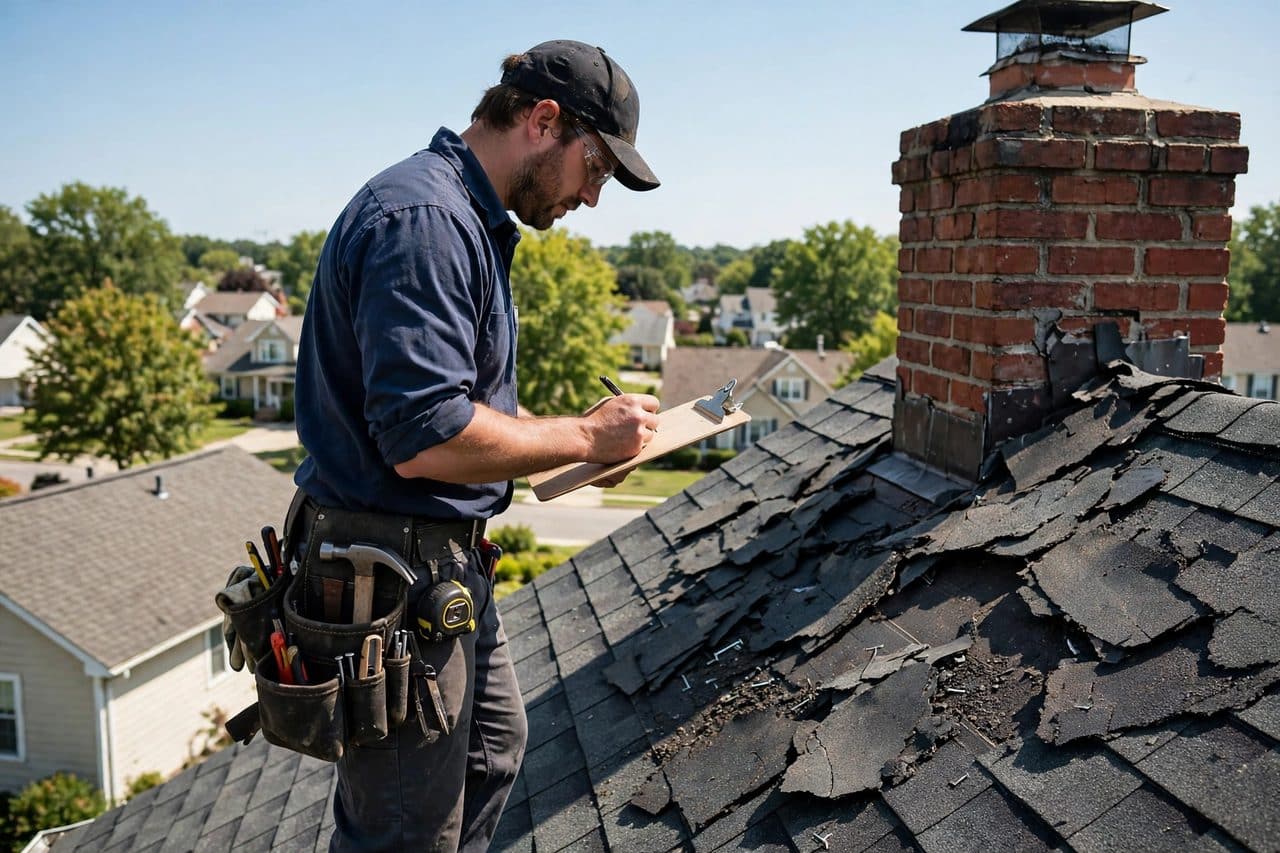
Repair your roof when it’s under 15 years old, the damage is isolated to one area, and the fix costs less than 25% of a replacement. Replace it when the roof is past 15 years, the damage covers more than 30% of the surface, or you’ve already patched the same spots more than once. That’s the whole decision in one paragraph — the rest of this guide shows you how to check each part of it on your own roof.
If you’ve got a leak, a few missing shingles, or a contractor telling you the whole roof has to go, you’re caught between a repair bill that feels small and a replacement bill that feels enormous. I’ve supervised a 15-person roofing crew, and the homeowners who got this decision right weren’t the ones who spent the most — they were the ones who checked four things first: the roof’s age, how much of it is damaged, how many times it’s already been fixed, and what the repair costs next to a new roof.
According to Verisk’s 2026 U.S. Roof Report, the average residential roof replacement cost $17,631 in 2025 — up 33% from the 2021–2024 average — and the average repair cost $4,699, up 25%. When a single repair can run several thousand dollars, the line between “fix it” and “replace it” matters more than it did five years ago.
Roof repair vs roof replacement: the four questions that decide it
Work through them in order, and the answer usually makes itself clear.
1. How old is the roof?
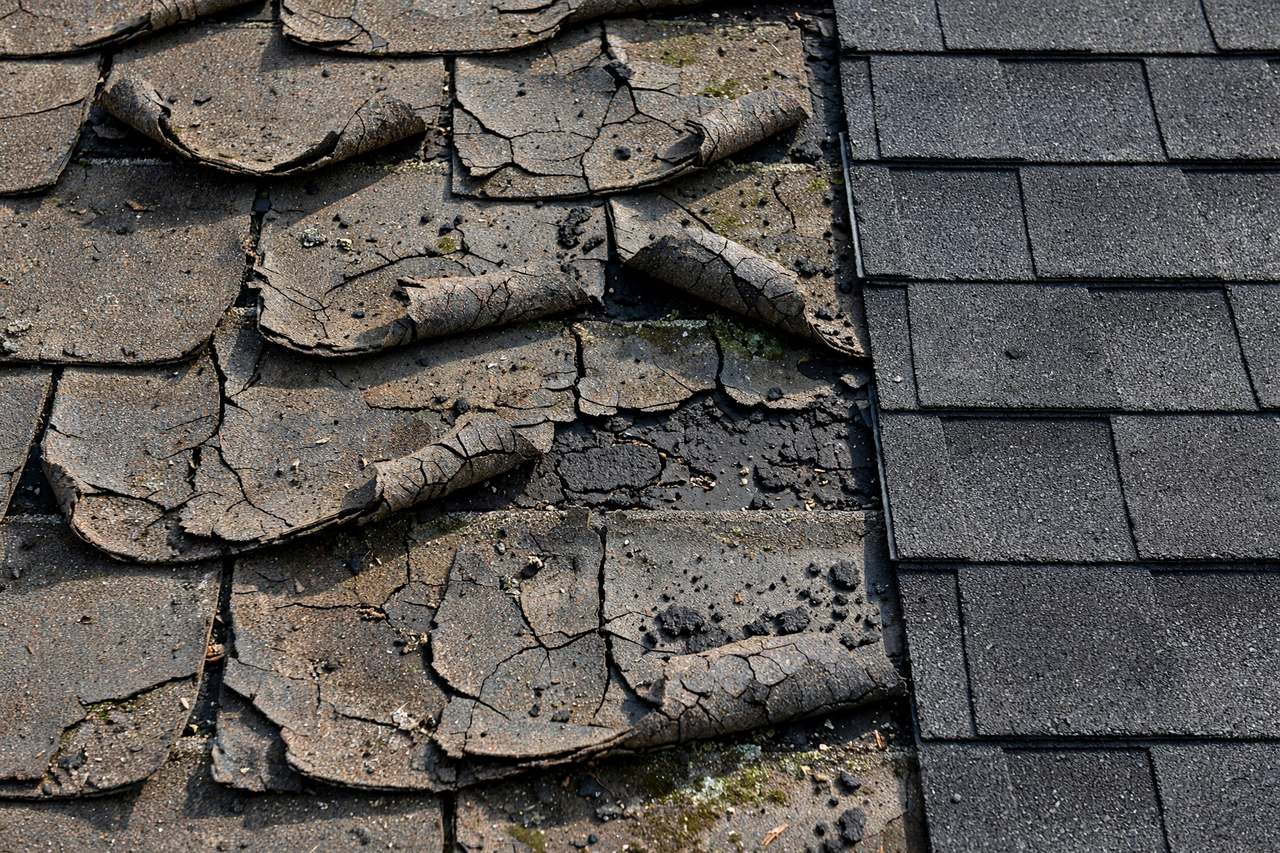
Age is the single biggest factor. A well-installed architectural shingle roof typically delivers 20–30 years of service; three-tab shingles usually last 15–20 years, and GAF’s published guidance puts three-tab at 20–30 years and architectural at 30–50 years under ideal conditions. Real-world service life runs shorter, especially in hot climates — Texas heat, for example, is hard on asphalt. But the decision rule is simple and comes straight from GAF: if your roof is under 15 years old and the damage is limited, repair it. If it’s over 15 and showing signs of damage — missing shingles, curling, granule loss, moisture growth — replacement is usually the better financial choice.
The closing documents from your home purchase, the permit from the last reroof, or a call to the previous owner can pin down the install year. If you can’t find it, a roofer can estimate age from the shingle type and wear — and our guide to the 9 signs you need a new roof (not just a repair) shows what aging looks like from the ground.
2. Is the damage isolated or widespread?
One failed pipe boot is isolated. Three failing pipe boots, a leaking chimney, and granule loss across the south slope is systemic. GAF’s guidance uses a clear threshold here: if 30% or more of the roof is damaged, replace it. Below 30%, a repair is reasonable — as long as the roof is 15 years old or younger and hasn’t had extensive repairs already. Most of those leak points are failed roof flashing, not failed shingles.
Walk the ground with a pair of binoculars and look for the pattern: missing shingles in one spot, or scattered everywhere? Granule loss in one valley, or bare patches across the whole field? Isolated damage has a clear boundary. Systemic damage doesn’t.
3. How many times has it already been repaired?
Repair history is the question homeowners forget to ask themselves. If you’re patching the same valley for the third time, or a new leak shows up every spring in a different spot, the roof is telling you the system is done — not that one detail failed. A roof that needs a repair every year or two is a roof that’s already costing you replacement money in installments, without giving you a new roof at the end of it.
Add up what you’ve spent on roof repairs in the last three years. If that total is approaching a quarter of what a new roof costs, you’re past the point where repairs make financial sense — which brings us to the math.
4. What does the repair cost next to a replacement?
This is where the numbers settle it. GAF’s guide states the rule plainly: if roof repairs will cost more than 25% of the cost of a new roof, replace it — otherwise you risk paying for the repair and then paying for the replacement anyway, not long after. With the average replacement at $17,631 in 2025 (per Verisk’s 2026 report), the 25% line sits around $4,400. A $2,000 repair on an otherwise healthy roof is a clear yes. A $5,000 repair on a 17-year-old roof is money you will not get back.
What roof repairs actually cost in 2026
Most single leak repairs cost $300–$1,200 in 2026, according to 2026 cost data compiled from HomeAdvisor and Angi, with most homeowners paying around $750–$1,060 for a typical leak fix. The leak’s location drives the price more than anything else:
- Missing or damaged shingles: $150–$500 — replace a handful of shingles, seal the nails, check the underlayment below.
- Vent pipe boot: $200–$500 — swap the cracked rubber boot and re-flash around the vent.
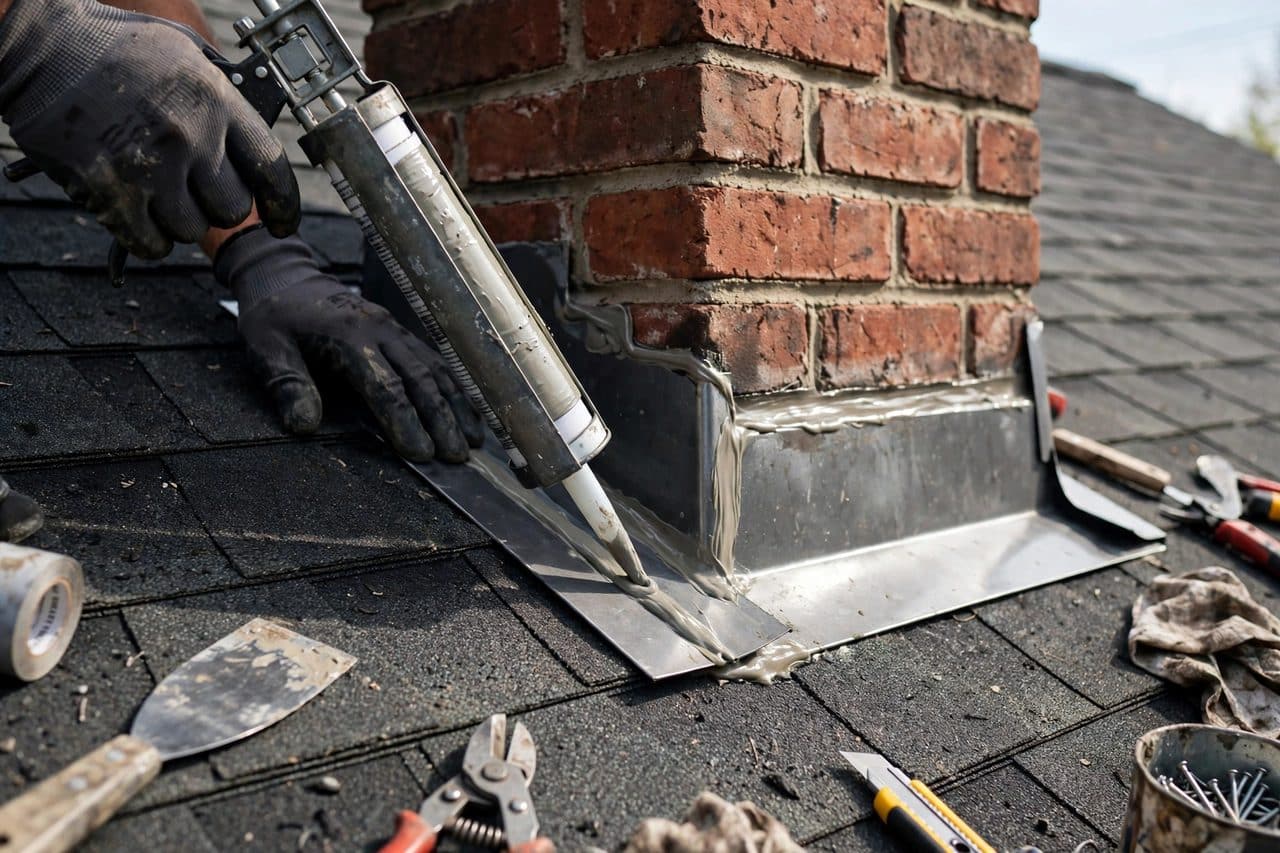
- Chimney flashing: $300–$900 — remove the old flashing, install new step and counter flashing.
- Skylight flashing: $300–$700 — re-flash around the skylight curb and check the seals.
- Valley repair: $500–$1,500 — valleys carry the most water, so the work is bigger and the stakes are higher.
- Ice dam damage: $500–$1,500 — shingles, underlayment, and ice-and-water shield all need replacing.
Those are surface repairs. Once a leak has softened the plywood decking underneath, or soaked insulation and drywall, the bill climbs fast — $1,500–$3,500 is common once decking and interior work get involved. That’s why a small leak is never a “deal with it later” problem: a $300 fix today becomes a $3,000 fix after three heavy rainstorms.
For the full picture on the other side of the decision, our complete 2026 roof replacement cost guide breaks down what a new roof actually runs by material, size, and region.
When repair is clearly the right call
Repair wins when all four of these are true:
- The roof is under 15 years old.
- The damage is isolated — one slope, one penetration, one valley.
- The decking underneath is solid (no sag, no soft spots).
- The repair costs well under 25% of a replacement, and it’s the first or second repair — not the fifth.
Classic repair cases: a few shingles torn off in a windstorm, a cracked pipe boot, a small branch puncture with intact decking around it, a flashing gap at one chimney. These are afternoon jobs. A good crew fixes them in a few hours, and the roof goes back to doing its job for years.
One thing worth knowing: on a roof that’s only a few years old, a repair blends in. On a 12-year-old roof, new shingles will look new next to weathered ones — cosmetic, not structural, and a fair trade for several more years of service.
When replacement is the honest answer
Replace when any of these are true:
- The roof is over 15 years old and showing widespread wear — curling, cracking, bald patches where the granules are gone.
- More than 30% of the surface is damaged.
- Leaks keep coming back in different places, or the same place keeps failing.
- The decking is sagging or soft in multiple spots — that signals structural trouble, and patching over it hides the problem.
- The repair quote is more than 25% of a new roof.
- You’re planning to sell within a few years and the roof is the first thing a buyer’s inspector will flag.
There’s also the version of this decision nobody likes to talk about: the roof that isn’t leaking yet but is clearly at the end of its life. Granules filling the gutters, shingles curling at the edges, a roof that’s 22 years old and has never been touched. Replacing it on your schedule — in a dry month, with three quotes in hand — costs less and goes smoother than replacing it on the weather’s schedule, in the middle of a storm, with water coming through the ceiling. A planned job is a calmer job, as our look at how long a roof replacement takes, day by day shows.
The cost-per-year math that settles close calls
When the four questions leave you on the fence, divide the cost by the years of service you can honestly expect. A $2,000 repair on a roof with 3 years of life left costs about $667 per year of service. A $16,000 replacement that lasts 20 years costs about $800 per year. Those numbers look close — until you remember the repair’s 3 years are a guess, and the replacement’s 20 years come with a new warranty. When the repair’s cost per year climbs above the replacement’s, replacement wins.
Run the same math with your own quotes. It’s the single most useful calculation in this whole decision, and it takes about thirty seconds.
How insurance changes the math
If storm damage caused the problem and your policy covers it, the equation flips. An approved hail or wind claim typically funds a full replacement minus your deductible — so you’re comparing a repair paid out of pocket against a replacement mostly paid by insurance. In that case, replacement usually wins, even on a younger roof.
But file carefully. Insurers have gotten stricter with hail claims, and a claim that gets denied still goes on your record. Before you call your insurer, document everything from the ground — photos, dates, the storm that caused it — and get a roofer’s inspection first. And check your deductible: with wind and hail deductibles commonly set at 1–3% of your dwelling limit, a $400,000 home can carry a $4,000–$12,000 deductible, which changes whether a claim is even worth filing for a mid-size repair.
What about a partial replacement?
Replacing one slope while leaving the rest sounds like a smart compromise, and sometimes it is — but rarely. It works when the damaged slope is significantly older than the rest, when insurance is funding the partial, or when the visual mismatch doesn’t matter because the slope faces the backyard. The problem is that the old slopes keep aging on their own schedule, so you often end up paying for the other half a few years later. For most homes, if one slope is done, the rest isn’t far behind.
Still not sure? Run the quiz
If you’ve worked through the four questions and you’re still torn, our free Repair or Replace Quiz walks you through your roof’s age, damage, and repair history and gives you a straight recommendation. It takes about two minutes, and it’s the same logic in this article — just applied to your specific roof.
Frequently asked questions
Can you repair a roof instead of replacing it?
Yes, in most cases — if the roof is under 15 years old, the damage is isolated to less than 30% of the surface, and the repair costs less than 25% of a replacement. GAF’s guidance draws exactly those lines: younger roof plus limited damage equals repair; older roof plus widespread damage equals replacement.
How much does it cost to fix a roof leak in 2026?
Most roof leak repairs cost $300–$1,200 in 2026, with most homeowners paying around $750–$1,060, according to 2026 cost data from HomeAdvisor and Angi. Simple shingle or pipe boot fixes run $150–$500; chimney and valley work runs $300–$1,500. Once decking or interior damage is involved, expect $1,500–$3,500.
Is it cheaper to repair or replace a roof?
Repair is cheaper today, but not always cheaper overall. A $2,000 repair on a roof with 3 years left costs about $667 per year of service; a $16,000 replacement lasting 20 years costs about $800 per year — and comes with a new warranty. When the repair’s cost per year exceeds the replacement’s, replacement is the cheaper move in the long run.
How do I know if my roof needs replacing or just a repair?
Check four things: age (over 15 years leans replace), how much of the roof is damaged (over 30% leans replace), repair history (repeated fixes in the same or different spots leans replace), and cost (a repair over 25% of a new roof leans replace). A sagging deck or widespread granule loss means replacement regardless of the other three.
Can a roofer repair just one section of a roof?
Yes — a single slope or section can be replaced while the rest stays, and it works when that slope is much older than the rest or insurance is funding it. But the remaining slopes keep aging, so a partial replacement often means paying for the rest a few years later. For most homes, if one section is done, a full replacement is the better value.
Will homeowners insurance pay to replace my roof instead of repairing it?
If the damage came from a covered event like hail or wind, an approved claim usually funds a full replacement minus your deductible. Cosmetic damage, wear and tear, and age-related failure are generally not covered. Document the damage and get a roofer’s inspection before filing, and check your wind/hail deductible first — at 1–3% of your dwelling limit, it may be larger than the repair itself.
Costs vary by region, roof complexity, and material — get local quotes before deciding. This article is general guidance, not a substitute for an in-person roof inspection.
Disclosure: RoofAdviceHub is reader-supported. When you buy through links on our site we may earn an affiliate commission at no extra cost to you. As an Amazon Associate we earn from qualifying purchases.
Last updated: November 2026
Leave a Reply