
Key takeaways
- You need a new roof — not another repair — when the roof is past 15–20 years, damage covers multiple slopes, leaks keep returning in new spots, or granules pour out of the gutters every rain.
- GAF’s rule of thumb: replace instead of repairing when the repair estimate tops 30% of a new roof’s price, or the roof is over 15 years old and already patched repeatedly.
- After hail, check the ridge caps and soft metal vents — if they’re clean and undented, you likely have no hail damage at all, no matter what a door-knocker says.
- Repairs still win for roofs under 10–15 years with damage in one spot and solid decking underneath.
You need a new roof when the roof’s whole system is wearing out — shingles curling and shedding granules across multiple slopes, leaks that return in new spots after each repair, or an asphalt roof past 15–20 years of service. A repair fixes one symptom; a replacement fixes the system.
I ran a 15-person roofing crew for years, and this was the question that came up at nearly every house: “Can’t you just patch it?” Sometimes yes — a good repair is honest work. But there comes a point where patching stops being a fix and starts being rent you pay on a dying roof. This guide is how a crew supervisor reads that point: what to look at from the ground, what to look at in the attic, and the simple math that tells you which way to go.
What your shingles are telling you
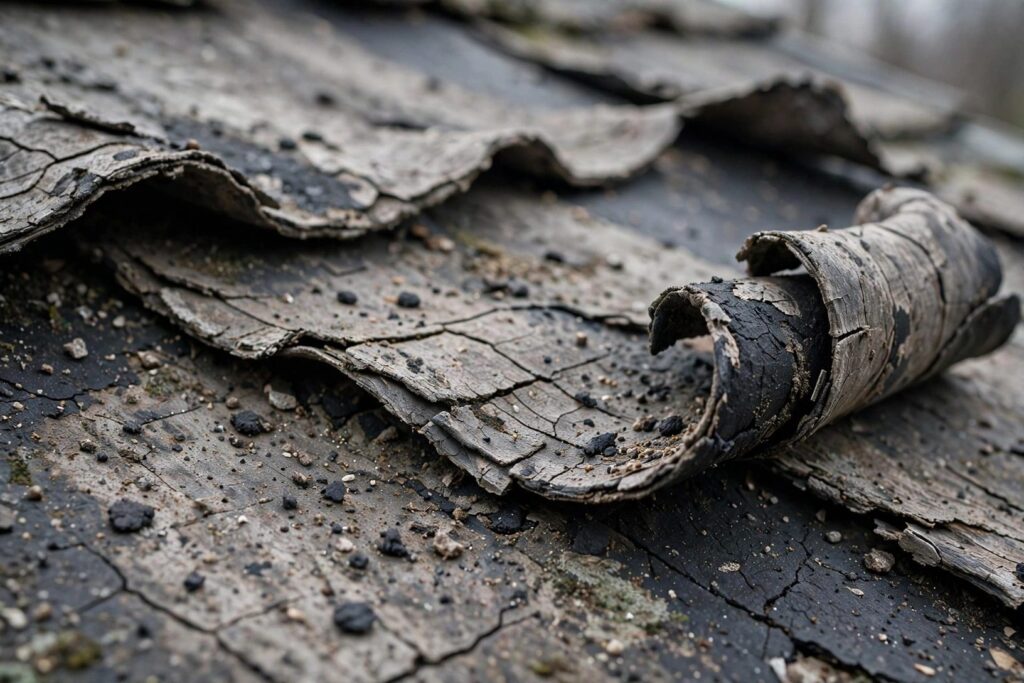
The shingles are the part you can actually see, and they tell the truth first. Before you climb anything, walk the perimeter of your house and look up — or better, look through a pair of binoculars from the ground. You never need to walk a roof yourself to read these signs.
Sign 1: Curling, cupping, or clawing shingles
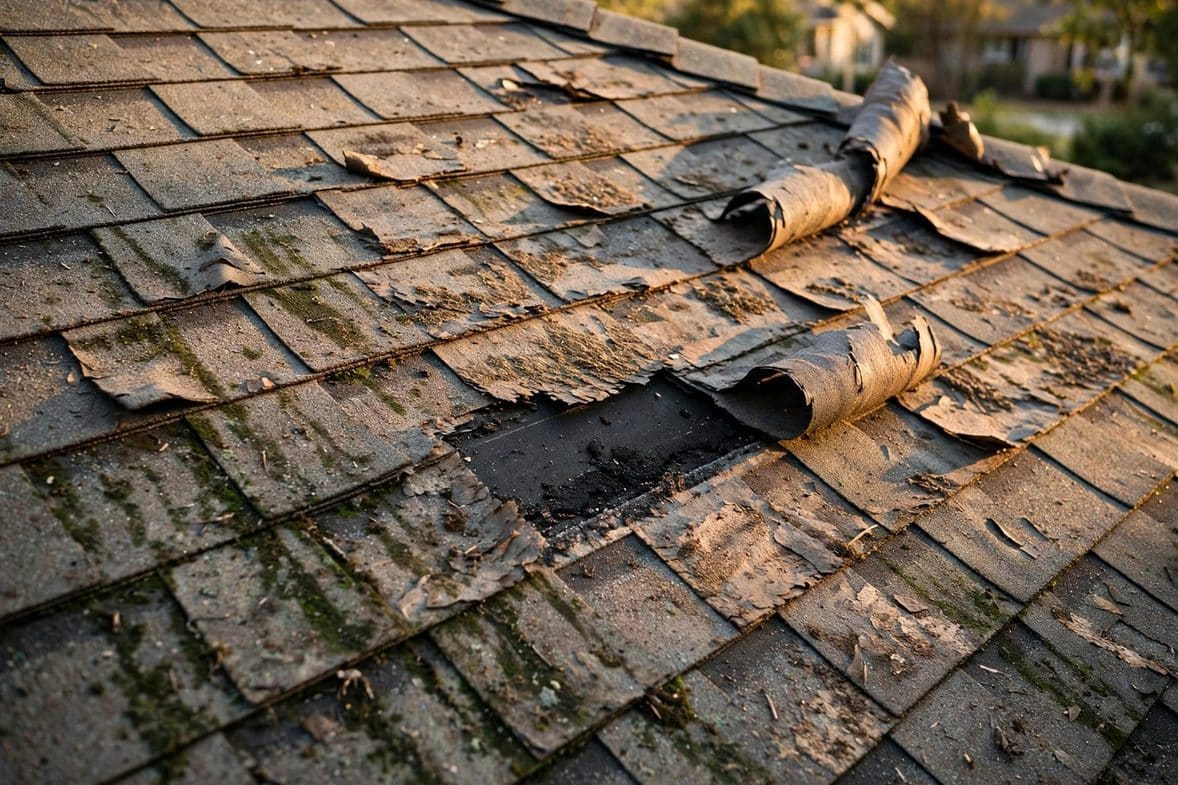
Shingle edges that curl upward (cupping) or tabs that claw downward are what ultraviolet heat and moisture do to aging asphalt. Once a shingle curls, it can’t shed water the way it was designed to — wind gets under the lifted edge and the seal is gone. A few curled shingles on one hot slope can be repaired. Curling across multiple slopes means the whole layer is aging out together.
Sign 2: Cracked shingles and missing corners
Shingles that crack or lose corners are brittle — they lost the flexibility that lets them survive freeze-thaw cycles and wind. Cracking is also one of the clearest ways to tell hail bruising apart from honest wear: hail hits look like soft, round dents with granules knocked off in a pattern, while age cracking follows the shingle’s surface randomly. If you’re checking for hail after a storm, look at the ridge caps and the soft metal first — roof vents, drip edge, gutters. Real hail dents thin metal. Clean ridge caps and undented vents with “widespread hail damage” being claimed around them is one of the most common red flags in the trade: if the metal didn’t dent, the shingles likely didn’t bruise.
Sign 3: Granules piling up in the gutters
Those sand-like granules are the shingle’s sunscreen. A new roof sheds some loose granules in its first year — that’s normal. A 15-year-old roof shedding granules every rain is not. Check your gutters and the ground under your downspouts: heavy black grit means the shingles’ UV protection is washing away. And if you ever see shiny patches when the sun hits the roof, that’s the fiberglass mat showing through where the granules are gone — the roof has nothing left to give.
What your attic and ceilings are telling you
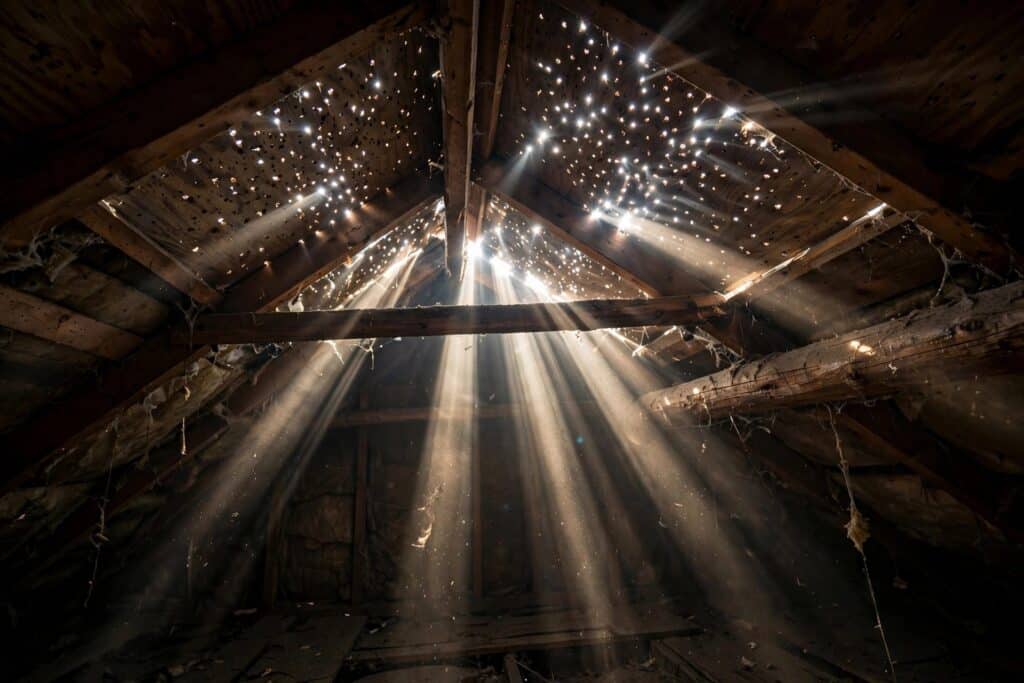
The outside lies sometimes — a fresh-looking roof can hide problems. The inside of the house doesn’t lie. Get into the attic on a sunny day and turn the flashlight off.
Sign 4: Daylight through the roof deck
Any pinpoints of light coming through the plywood are openings water has already found or will find. Small isolated spots near a pipe boot can be repaired from the outside. Daylight in several places, especially near the eaves or along valleys, means the system is compromised in multiple spots — patching one doesn’t change the odds for the others.
Sign 5: Water stains that keep moving
One stain on one ceiling is a leak story with a beginning, a middle, and a fix. Stains in different rooms — or the same stain coming back after a repair — are a system story. On my crew, repeat leaks in different spots were the surest signal that the underlayment was done: the shingles had stopped protecting what was beneath them, and each “repair” was just plugging the newest exit. If you’ve repaired the same roof twice and a third leak shows up somewhere new, stop paying for repairs and price the replacement. Most of those repeat leaks start at the roof flashing, not in the shingles themselves.
Sign 6: Sagging between the rafters
From inside the attic, look along the roof deck for areas that dip or feel soft when pressed. Sagging means the decking itself is compromised — usually long-term moisture rot. Decking repairs are possible in isolated sections, but widespread softness means the tear-off will include new plywood across large areas, and at that point the repair-vs-replace math tilts hard toward replacement.
The age and repair-history math
This is where the decision stops being about symptoms and starts being about money. Two numbers settle most cases.
Sign 7: The roof is past its expected lifespan
Most architectural shingles carry a 30-year limited warranty, but the real service life depends on climate: in Texas heat, 15–22 years is a realistic range for asphalt, while standing-seam metal can run 40–70 years with minimal upkeep. If your asphalt roof is pushing 20 and showing any of the signs above, you’re not replacing early — you’re replacing on schedule. A roof that old with a clean bill of health can wait, but a roof that old with curling and granule loss won’t be fixed by patching.
Sign 8: You’ve already patched it — more than once
GAF’s homeowner guidance puts it plainly: lean toward replacement if the roof has been repaired several times already, or if the roof is more than 15 years old — and specifically, if the estimated repair cost exceeds 30% of the price of a new roof. GAF’s own repair-vs-replace guide lists exactly those thresholds. One $800 repair on a 12-year-old roof is sensible. A second $1,200 repair two years later on the same roof is rent on a roof you don’t own anymore. Add up your last three years of roof bills: if you’re approaching a third of what a replacement actually costs (GAF reported an average 2023 asphalt replacement around $14,959 nationally), you already have your answer.
Sign 9: The roof no longer looks like one roof
Patchwork is honest work, but patches on an old roof never match — different shingle lines, different fading, different ages. Beyond cosmetics, mismatched repairs can be a real problem: if your shingle line was discontinued, new bundles won’t be available and a “patch” becomes a visible band-aid that hurts curb appeal. When more than about a quarter of the surface is patched or damaged, most experienced roofers will tell you a repair is no longer a legal or practical option in many jurisdictions — and it’s certainly no longer the better use of the money.
When a repair is still the right call
Replacement is not the answer every time — and any roofer who says so is selling, not advising. GAF’s guidance agrees: repair when the roof is 10 years old or newer with minor, localized damage to shingles or step flashing, when the leak is minor and easy to trace, and when there’s no structural damage. A single lifted shingle after a wind gust on an 8-year-old roof is a $200–$500 repair, not a $12,000 replacement. If you’re genuinely unsure, run through the repair-or-replace quiz — it walks through these exact questions in two minutes. For a fuller walkthrough, see how to decide between a roof repair and a full replacement.
And once you’ve decided: replacement isn’t a one-day event you just hand off. Knowing what actually happens day by day during a roof replacement — and what material choice fits your climate (metal vs asphalt is the big fork in the road) — is what separates a smooth project from a stressful one.
Frequently asked questions
How do I know if my roof needs replacing or repairing?
Age, scope, and history decide it. Repair if the roof is under 10–15 years, damage is in one spot, and the decking is solid. Replace if it’s past 15–20 years, damage spans multiple slopes, leaks keep returning in new spots, or repair quotes approach a third of a new roof’s price — the 30% threshold GAF publishes in its homeowner guidance.
What are the first signs of a bad roof?
The earliest warnings most homeowners notice: granules collecting in the gutters, shingles that look darker or damp in dry weather, flashing that’s lifting or rusting around chimneys and vents, and unexplained creep in energy bills (poor ventilation cooking the shingles from below).
How long does a roof last before it needs replacing?
Architectural asphalt shingles typically carry a 30-year limited warranty but deliver 15–25 years of real service depending on climate — less in extreme heat. Metal roofing runs 40–70 years. Lifespan isn’t the trigger by itself; it’s lifespan plus the physical signs described above.
Can you replace just part of a roof?
Sometimes — on a roof with one damaged slope and everything else healthy, a partial replacement is legitimate work. But once multiple slopes show wear, matching old and new shingles gets difficult (discontinued lines, different fading), and most roofers won’t warranty a patchwork roof the way they warranty a full one.
Will my insurance cover a roof replacement?
Insurance covers sudden, accidental damage — hail, wind, fallen trees — not age and wear. After a storm, document everything: dated photos, ridge caps, soft metal vents. If the metal isn’t dented, be skeptical of anyone claiming widespread hail damage — and never sign a claim pushed by a door-knocker without your own inspection first.
Last updated: October 2026
Disclaimer: Cost ranges vary by region, roof size, pitch, and material — always get local written quotes before budgeting. This guide is educational, not a substitute for an on-site inspection by a qualified roofer.
Disclosure: RoofAdviceHub is reader-supported. When you buy through links on our site we may earn an affiliate commission at no extra cost to you. As an Amazon Associate we earn from qualifying purchases.
Leave a Reply