
Key takeaways
- A full roof replacement in Arizona typically costs $8,000–$16,000 for architectural shingles on a 2,000 sq ft roof in 2026, with tile systems running $21,000–$32,000.
- Desert heat is the real cost driver: architectural shingles rated for 30 years commonly last 15–18 years in Phoenix, so you may buy two roofs in the time one lasts elsewhere.
- On tile roofs, the tile is not the waterproof layer — the underlayment is, and it fails after 20–25 years while the tile still looks perfect.
- Arizona licenses roofers through the Registrar of Contractors (R-42 license), and unlicensed contracting is a class 1 misdemeanor — always verify before you sign.
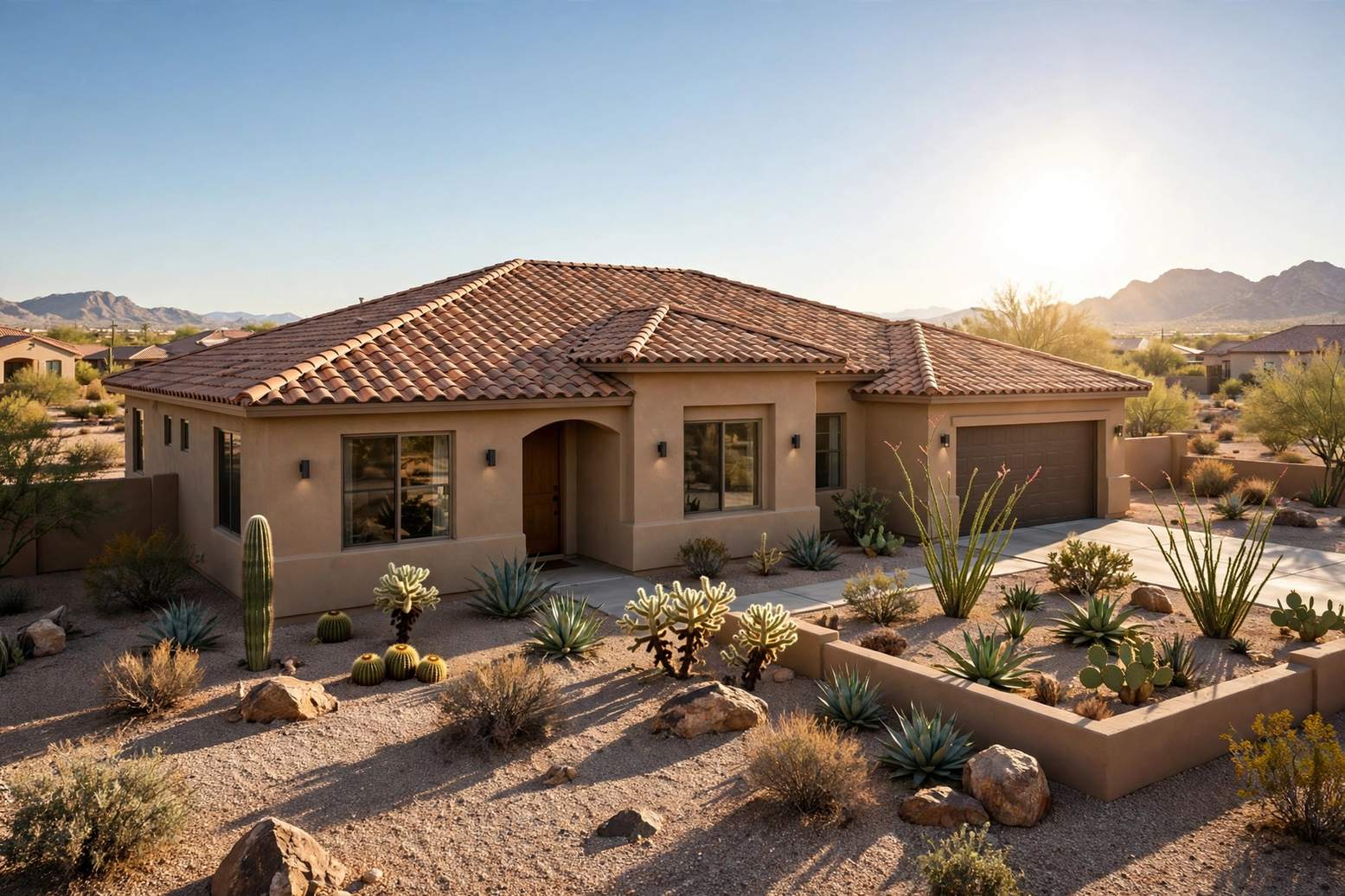
A roof replacement in Arizona costs most homeowners $8,000–$16,000 for architectural asphalt shingles on a typical 2,000 sq ft roof in 2026, while concrete or clay tile runs $21,000–$32,000. Those are installed prices with tear-off included — but the number on your quote depends heavily on your material, your city, and whether your roof hides the one expense Arizona homeowners keep getting surprised by: the underlayment under a tile roof.
Arizona is not a cheap-roof state, and it is not an expensive one either. It sits below the national average on paper, yet the desert climate punishes the cheapest materials harder than almost anywhere else.
Roof replacement cost in Arizona by material (2026)
The table below starts from published national installed prices per roofing square (100 sq ft), adjusted by Arizona’s regional cost factor of 0.88 from our 2026 national roof replacement cost guide. Totals assume a typical 2,000 sq ft roof surface, about 20 squares.
| Material | Installed per square | Typical total (2,000 sq ft roof) | Realistic lifespan in Arizona |
|---|---|---|---|
| 3-tab asphalt shingles | $310–$400 | $6,200–$8,000 | 12–15 years |
| Architectural asphalt shingles | $400–$570 | $7,900–$11,400 | 15–18 years |
| Standing-seam metal | $790–$1,230 | $15,800–$24,600 | 40–70 years |
| Concrete or clay tile (full new system) | $1,060–$1,580 | $21,100–$31,700 | 50+ years (tile); underlayment 20–25 years |
| Tile underlayment replacement (lift-and-reset, tile reused) | $300–$600 per square* | $6,000–$12,000 | 20–25 years |
*Underlayment replacement is priced per square foot of roof surface ($3–$6). On a typical 1,800 sq ft tile home it usually lands around $10,000–$18,000, including tile removal, stacking, reinstallation, and a 5–10% tile breakage allowance.
One honest note: these factor-adjusted ranges run a little below what Phoenix-area contractors actually publish in 2026. Arizona Roofers’ 2026 guide puts architectural shingles at $9,000–$14,000, and Angi’s Phoenix average sits at $8,856. The statewide factor smooths out cheaper rural markets; the Phoenix metro, where most Arizonans live, runs higher.
If you are comparing several quotes, compare them line by line, not by the bottom number. The same roof can draw bids thousands of dollars apart, and the difference is almost always in the scope — underlayment spec, tear-off, flashing, decking — not in the shingles. Our roof cost calculator, preselected for Arizona, gives you a baseline to check any bid against before you sign.
Why Arizona roofs cost what they cost: heat, monsoon, and tile
The heat shortens shingle life
Roof-surface temperatures on south-facing slopes in Phoenix routinely pass 160°F in July and August. That heat cooks the asphalt binder, dries out the oils, and loosens granules year after year. As Phoenix roofing crews report after each monsoon season, an architectural shingle rated for 30 years in a moderate climate realistically delivers 18–25 years in Phoenix — and other Arizona specialists put the functional end of life at 15–18 years, with three-tab shingles often done by year 12.
That shorter life changes the math. A $10,000 shingle roof you replace twice in 30 years costs more than a $20,000 tile or metal roof you replace once — before you count the disruption of a second tear-off. This is the single most important tradeoff in Arizona roofing, and the reason so many Valley homes wear tile even though it costs twice as much up front. Our metal vs. asphalt shingles comparison breaks down the same lifecycle math for the other long-life option.
Monsoon season finds every weak spot
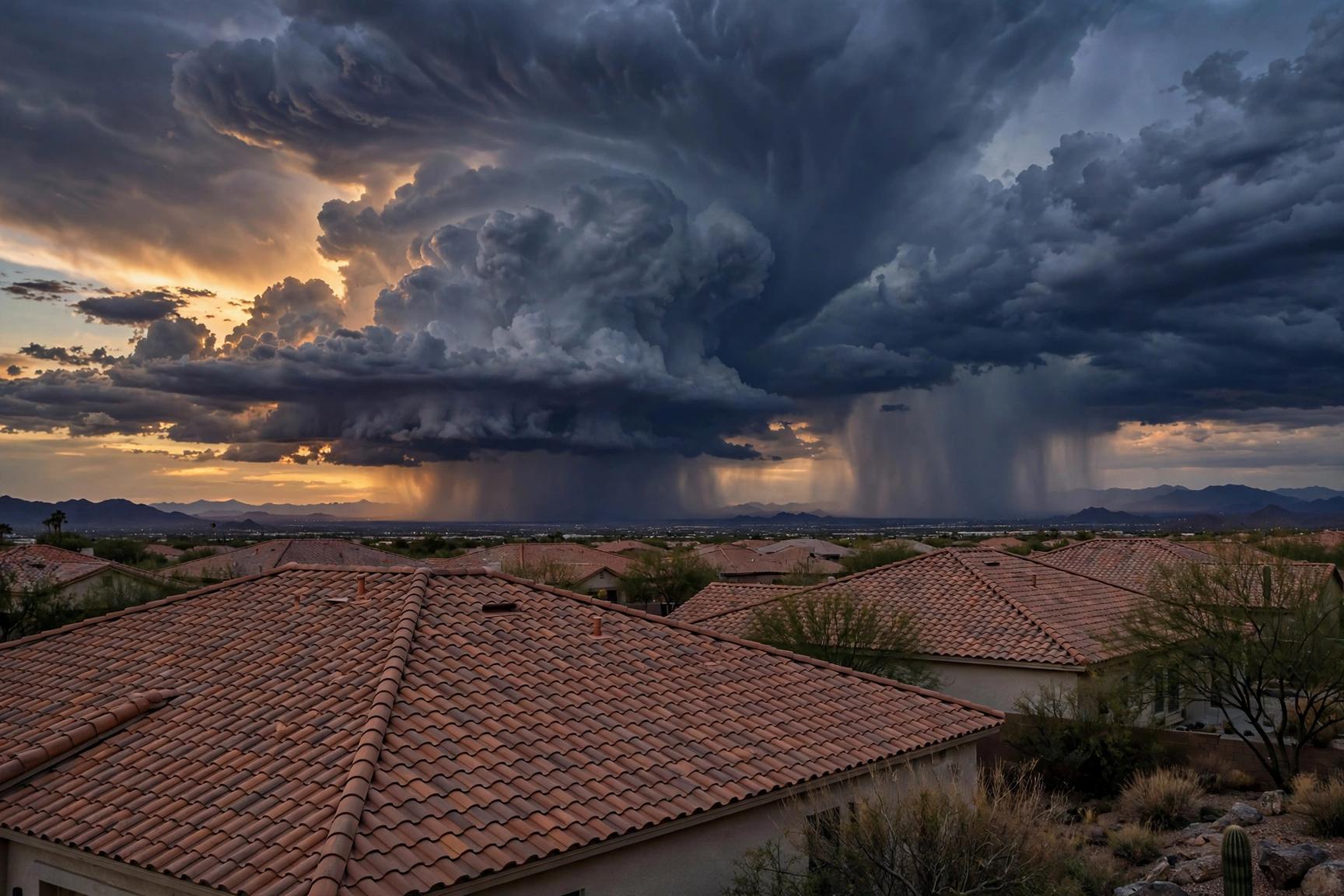
Arizona’s monsoon runs June 15 through September 30, according to the National Weather Service, and it does not rain the way rain does elsewhere. Microbursts, wind-driven rain, and dust storms hit with gusts that regularly top 60 mph, and the rain comes in sideways. That is why GAF’s 2026 specs rate its Timberline HDZ shingles at 130 mph wind resistance — and why flashing and seal strips matter more here than in a mild climate.
After a monsoon storm, walk the ground around your house before you climb anything: slipped tiles, shingles in the yard, and granules piled in the gutters all mean damage. An August storm can sit unnoticed until the next rain.
Tile roofs hide their real expense underneath
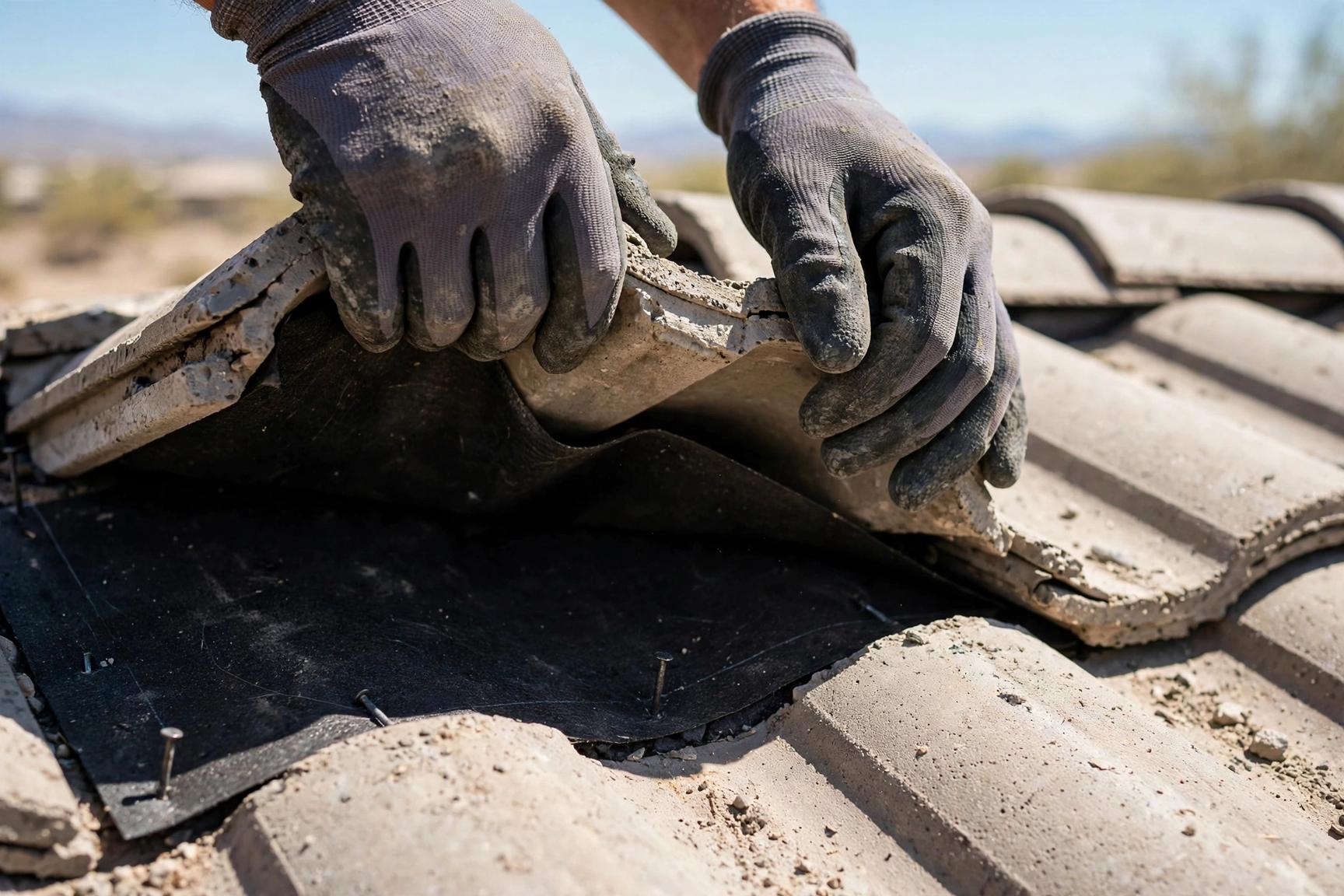
Concrete and clay tile dominate Arizona’s master-planned communities, and the tile itself is nearly indestructible — 50 years or more of sun, heat, and UV without blinking. The problem is what sits underneath it. The tile is not the waterproof layer. The underlayment is, and in Phoenix it typically lasts 20–25 years, sometimes less on older homes with a single layer of 30-pound felt.
That mismatch is the most common surprise in Arizona roofing: a tile roof that looks perfect from the street and leaks anyway, because the felt beneath it gave out while the tile was still fine. The fix is usually a lift-and-reset — crews remove and stack your tile, strip the old underlayment, install new underlayment, and reset the original tile — for roughly $10,000–$18,000 on a typical tile home, instead of the $21,000–$32,000 a full new tile system costs.
Permits, licensing, and HOAs
Arizona has no single statewide residential building code. Each city, county, and fire district adopts its own edition of the International Residential Code, so the rule in Phoenix is not automatically the rule in Tucson or Flagstaff. A full re-roof almost always requires a permit, and switching materials — shingles to tile, for example — changes the roof’s weight and triggers structural review. In Phoenix, the city’s own brochure lists a same-material re-shingle or re-tile as not needing a permit, but the adopted re-roofing code section points the other way for full replacements. Call your city’s planning department before the job starts, and make sure the permit cost (typically $150–$700) is in the quote, not added later.
Licensing is clearer, and it is the single most useful check you have. Arizona licenses roofers through the Registrar of Contractors: residential roofing falls under the R-42 class, or the dual CR-42 class that covers commercial work too. Contracting without a license is a class 1 misdemeanor in Arizona, with a first-offense fine of at least $1,000. Before you sign anything, look the contractor up at roc.az.gov — the search takes two minutes and shows whether the license is current, what scope it covers, and whether complaints are on file. Arizona also runs a Residential Contractors’ Recovery Fund that can cover up to $30,000 per residence for workmanship failures by a licensed contractor.
Then there is the HOA. Much of the Phoenix and Tucson housing stock sits in master-planned communities whose architectural standards dictate material and color — concrete tile is often a requirement, not a choice. Check your HOA’s design guidelines before you pick a material, and budget time for design review, which can add weeks in Scottsdale.
What a roof replacement costs by Arizona city
Phoenix is the benchmark market because it has the best published data: Angi’s Phoenix average is $8,856, with a typical span of $6,273–$11,694, at roughly $4–$11 per square foot installed. Scottsdale runs higher — typically $11,100–$23,500 for a comparable home — driven by clay tile, larger homes, and HOA design review. Tucson tracks close to Phoenix, with contractor rates around $3.50–$6.00 per square foot for 3-tab shingles and $4.00–$8.00 for architectural shingles. Flagstaff and Prescott are a different job: snow load, ice shielding, and shingles built for freeze-thaw cycles, at comparable per-square-foot prices but with a different spec. Fall and early winter are the cheapest season to replace a roof — crews are less booked after monsoon season ends.
Frequently asked questions
How much does a roof replacement cost in Arizona?
Most Arizona homeowners pay $8,000–$16,000 for architectural asphalt shingles on a typical 2,000 sq ft roof in 2026, according to published Arizona contractor pricing and cost guides. Concrete or clay tile runs $21,000–$32,000, and standing-seam metal $15,800–$24,600. Phoenix averages about $8,856 (Angi, 2026).
Do you need a permit to replace a roof in Arizona?
Usually yes. Arizona has no statewide code — each city adopts its own rules — but a full re-roof almost always requires a permit, and switching materials (for example, shingles to tile) always does. In Phoenix, the city’s brochure lists same-material re-shingling as exempt, while the adopted building code points the other way, so confirm with your city’s planning department before work starts. Permit fees typically run $150–$700.
How long does a roof last in Arizona heat?
Shorter than the warranty suggests. Architectural shingles rated for 30 years commonly last 15–18 years in Phoenix, and three-tab shingles are often done by year 12, because rooftop temperatures above 160°F break down the asphalt binder. Tile lasts 50 years or more, but the underlayment beneath it fails after 20–25 years and needs replacing while the tile is still good.
Is it cheaper to repair or replace a roof in Arizona?
It depends on age and scope. If your roof is under 15 years old and the damage is limited to a few shingles or a flashing detail, a repair ($250–$1,500 for common fixes) is usually the right call. If the roof is past 20 years, the underlayment is failing under tile, or repairs keep coming back, replacement is cheaper than chasing leaks — our repair vs. replacement guide walks through the decision.
Costs vary by region, roof complexity, and material — get local quotes from licensed Arizona roofers (R-42 or CR-42) before you commit. Prices here are planning ranges from published 2026 sources, not quotes.
Last updated: November 2026
Disclaimer: RoofAdviceHub is an educational resource, not a roofing contractor. Always verify permit and licensing requirements with your city and the Arizona Registrar of Contractors, and get at least three written quotes on the same scope before hiring.
Leave a Reply