
Key takeaways
- A roof replacement in Ohio in 2026 typically costs $6,000–$32,000 for most homes, with architectural shingles on a mid-size home running about $12,000–$19,500.
- Ohio has no statewide roofing license, but a new 2026 law requires residential contractors to register with the state — and most big cities still require a local permit.
- Ohio’s Residential Code requires an ice barrier at the eaves, extending at least 24 inches inside the exterior wall — the single most-skipped line item on cheap quotes.
- Ohio is a codified roof-matching state: after storm damage, your insurer may owe you matching shingles, not just a patch.
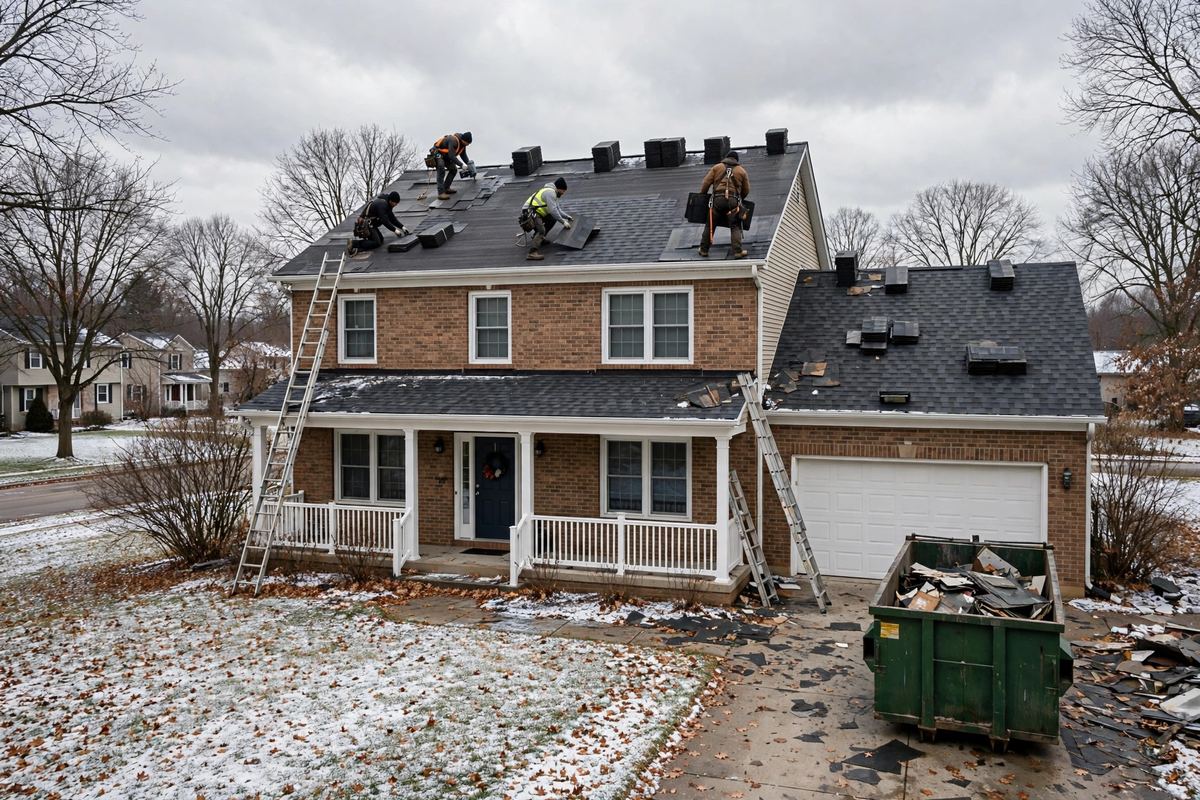
A roof replacement in Ohio in 2026 typically costs $6,000 to $32,000 for most homes, with the most common job — architectural shingles on a mid-size house — landing around $12,000 to $19,500. The average Ohio homeowner pays about $6,831 according to This Old House’s 2026 Ohio figures, but that average hides a wide spread: material choice alone can triple the bill, and where you live in the state changes the price by hundreds or thousands. NRCA’s October 2026 figures put roofing materials up 11.2% year over year, with manufacturers raising prices twice in 2026 — waiting until spring doesn’t freeze the price.
Ohio sits close to the national average on roofing costs — one 2026 Ohio pricing model puts the state about 4% below the national average, another about 2% above it. Either way, you’re not paying California prices. What you are paying for is a roof that has to survive four real seasons: lake-effect snow in the north, summer heat and hail in the middle, and freeze-thaw cycles everywhere.
Roof replacement cost in Ohio by material (2026)
Material is the single biggest lever on your total. The table below uses 2026 Ohio installed prices — tear-off, disposal, underlayment, flashing, and drip edge included — from RoofPitch’s 2026 Ohio pricing guide and This Old House. Totals assume a 2,000 sq ft roof, roughly 20 squares.
| Material | Installed cost per sq ft | Typical total (2,000 sq ft roof) | Realistic lifespan |
|---|---|---|---|
| 3-tab asphalt shingles | $3.50–$6.00 | $7,000–$12,000 | 15–20 years |
| Architectural (dimensional) shingles | $4.50–$8.00 | $9,000–$16,000 | 20–30 years |
| Class 4 impact-resistant shingles | $6.00–$10.00 | $12,000–$20,000 | 25–35 years |
| Standing seam metal | $11.50–$20.60 | $23,000–$41,000 | 40–70 years |
| Slate | ~$15.31 average | $17,500 and up | 75–100+ years |
Two sources disagree on the typical architectural-shingle job. This Old House puts the average Ohio roof at $6,831, with a range of $5,222–$17,531 — but that reflects Ohio’s median home of about 1,803 sq ft, or roughly 18 squares. 3D Roofs’ June 2026 Ohio data puts a mid-size architectural shingle replacement at $12,081–$19,444. The gap is mostly home size and material grade. Get quotes for your roof, not for an average.
For most Ohio homeowners, architectural shingles are the sweet spot: roughly $1–$2 more per square foot than 3-tab, about a decade longer in service. Our comparison of architectural vs 3-tab shingles breaks down exactly where the extra money goes. If hail is a regular visitor in your county, Class 4 impact-resistant shingles are worth pricing — $6.00–$10.00 per square foot installed, and some insurers offer a premium discount for them.
What drives the price up (or down) in Ohio
Winter is the cost driver other states don’t have. Ohio is snow-belt country, and the Residential Code of Ohio, section R905.1.2, requires an ice barrier under asphalt shingles wherever ice has a history of backing up at the eaves — which the code table lists as essentially every jurisdiction in the state. That barrier has to run from the roof edge to at least 24 inches inside the exterior wall line, and 36 inches up from the eave on roofs 8:12 or steeper. It is a real line item, and one of the first things a suspiciously cheap quote quietly leaves out. Our ice dam guide explains how the mechanism works.
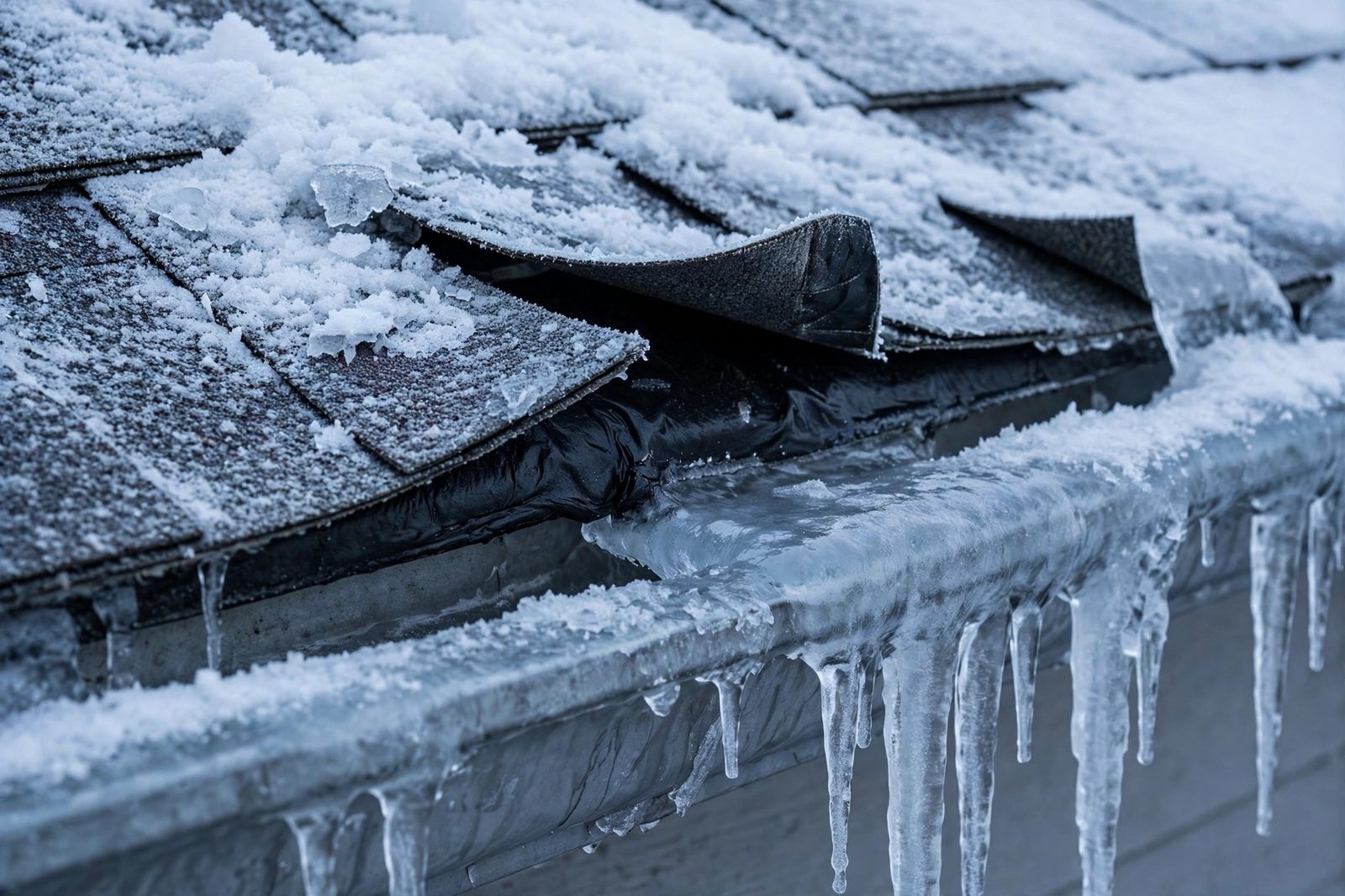
Lake-effect snow changes the math in the north. Cleveland and the Lake Erie shoreline get heavier, wetter snow than Columbus or Cincinnati, and that means more ice-dam risk and more weight on the deck. A metal roof sheds snow well and lasts 40–70 years, which is why you see more of them in the snow belt — but at $11.50–$20.60 per square foot installed, it roughly doubles the cost of architectural shingles. Our metal vs asphalt comparison lays out the honest tradeoff, including the noise question.
Hail and wind are the other Ohio reality. Central Ohio sits in the path of regular spring severe weather, and hail claims are a routine part of roofing life here. Class 4 shingles and a strong wind rating are worth more here than in a mild climate — GAF’s Timberline HDZ, the most common architectural shingle in the country, is rated to 130 mph and carries a 15-year WindProven warranty with no maximum wind speed when installed as a full GAF system. And hail damage is where insurance gets involved — Ohio has a rule most homeowners don’t know about, covered below.
Permits and the new 2026 contractor registration law
Ohio has never had a statewide roofing license. The Ohio Construction Industry Licensing Board licenses electricians, HVAC, plumbers, hydronics, and refrigeration — roofing isn’t on that list. That changed, partially, on January 1, 2026, when House Bill 614 created Ohio’s first statewide Home Improvement Contractor Registration. According to RoofPitch’s 2026 Ohio guide, contractors doing roofing work on a 1-, 2-, or 3-family home must now register with the state, carry a $25,000 surety bond and $500,000 in general liability coverage, and pass a criminal background check. Ask for the registration — it now exists, and it’s checkable.
Permits are a separate question, and the answer depends on your address. Good Ol’ Boys Construction’s November 2026 Central Ohio guide confirms that Columbus, Hilliard, Gahanna, Grove City, and unincorporated Franklin County all require a permit for a full roof replacement, and Cleveland does too. Cincinnati is the surprise: the city generally exempts a re-roof of up to two layers, though suburbs around it often require one, and historic-district homes need a Certificate of Appropriateness regardless. Permit fees run $75–$1,000 depending on the city. Your contractor should pull the permit in their own name; if they ask you to pull it, that’s a red flag.
Insurance in Ohio: the roof-matching rule
Ohio is a codified roof-matching state. In plain language: if storm damage forces a repair and the original shingles are no longer made — or can’t be matched in color and profile — your insurer may owe you a full slope or a full roof, not just a patch of mismatched shingles. That’s a real financial lever after hail, and one reason to document your roof’s condition before a storm, not after. And if your roof is 15-plus years old, get a second opinion before accepting a “full replacement” verdict — localized damage is often repairable, as our repair vs replacement guide explains.
How to read an Ohio roofing quote (four questions)
The shingles are only one of about nine jobs in a roof replacement, and the quote-to-quote variation that frustrates Ohio homeowners almost always hides in the other eight. A format circulating this month — The Homeowner Files’ “four questions” breakdown of a $15,105 quote — shows how four answers cover $5,320 of the job:
- Is tear-off to the deck included, with the dumpster? About $3,000 on a typical job. A quote that reuses the old layer is a different job.
- What is the price per sheet of decking, installed? Expect roughly $100–$115 per sheet. Ten sheets of rotten plywood is a $1,000-plus surprise if it’s not in writing.
- Is all flashing new, or reused? Chimney, wall, and pipe flashing runs about $700 new. Reused flashing is the most common source of a “new roof” that leaks in year one.
- What ventilation is included — and does the price cover closing the old vents? A ridge vent runs about $500; four box vents can cost $2,000.
Get three quotes in writing and compare them line by line, not just the bottom number. The cheapest quote is usually the most expensive roof, because it saves money where you can’t see it: skipped underlayment, light adhesive, fewer fasteners.
Get your number before you call anyone: run your roof through our Roof Cost Calculator with Ohio preselected — a state-adjusted estimate by material in about a minute, so you walk into the first estimate knowing what the job should cost.
Frequently asked questions
How much does a roof replacement cost in Ohio in 2026?
Most Ohio homes cost $6,000–$32,000, according to RoofPitch’s 2026 Ohio pricing guide. This Old House puts the state average at $6,831, with a range of $5,222–$17,531. A mid-size home with architectural shingles typically runs $12,081–$19,444.
Do you need a permit to replace a roof in Ohio?
It depends on your city. Columbus, Cleveland, Hilliard, Gahanna, Grove City, and Franklin County all require a permit for a full replacement, with fees from $75–$1,000. Cincinnati generally exempts a re-roof of up to two layers. Confirm with your own building department — your contractor should pull the permit in their name.
Does Ohio require a roofing license?
No statewide roofing license exists, but as of January 1, 2026, House Bill 614 requires residential roofing contractors to register with the state through the Ohio Construction Industry Licensing Board, with a $25,000 surety bond and $500,000 in liability coverage. Cities like Columbus, Cleveland, and Cincinnati also require their own local registration.
How long does an asphalt shingle roof last in Ohio?
Architectural shingles realistically last 20–30 years in Ohio; 3-tab shingles last 15–20 years. Snow, ice dams, and freeze-thaw cycles shorten life in the north, while proper ice barriers and attic ventilation stretch it. GAF’s Timberline HDZ carries a lifetime limited warranty against manufacturing defects, but the warranty term isn’t the same as the roof’s actual service life.
Costs vary by region, roof complexity, and material — get local quotes. Prices shown reflect 2026 Ohio sources and should be confirmed with contractors in your city.
Last updated: November 2026
Leave a Reply