
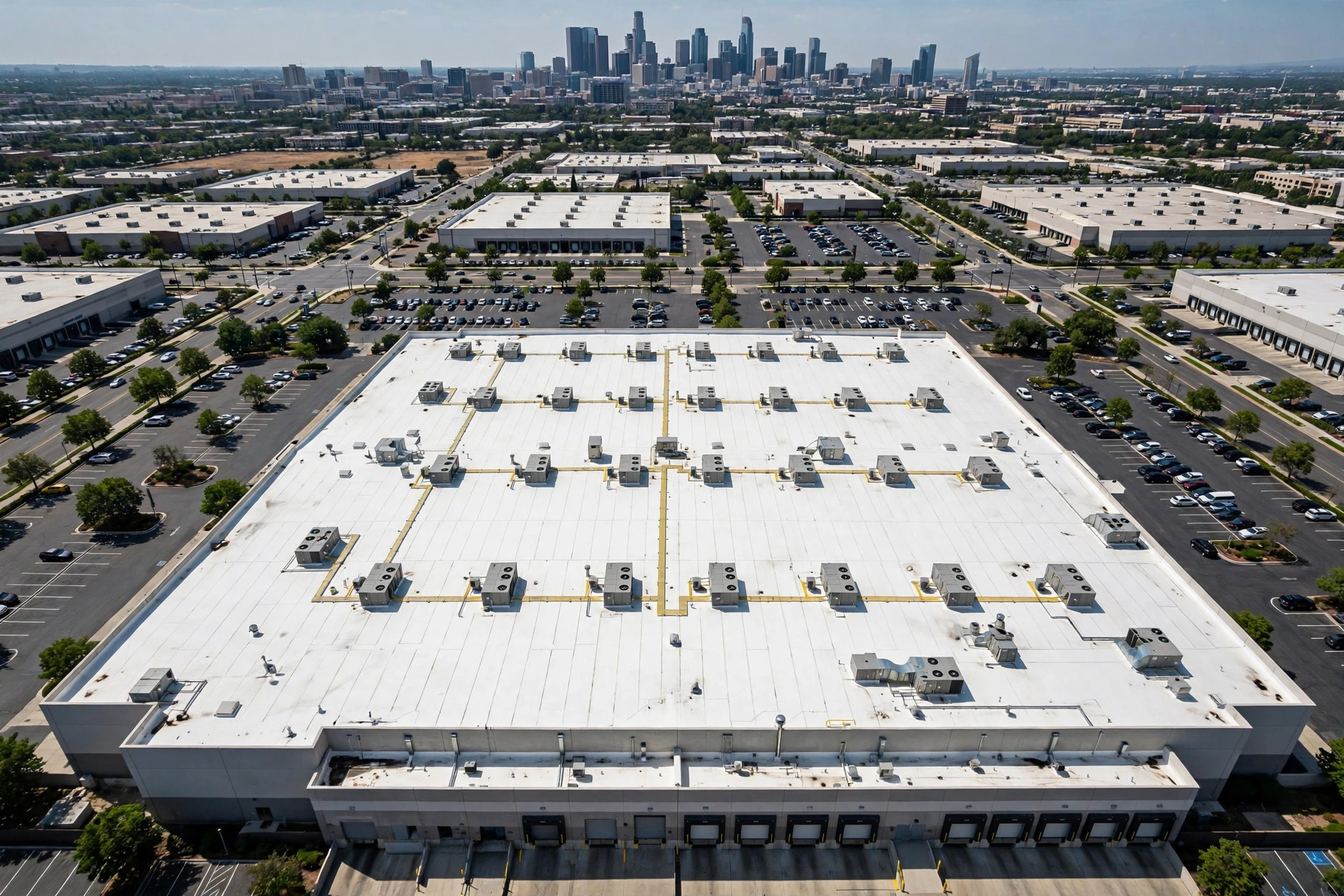
Key takeaways
- Single-ply membranes (TPO, EPDM, PVC) last 15–30 years; standing-seam metal lasts 40–70.
- One fluid-applied coating adds 10–20 years per application — the cheapest way to extend a sound-but-aging roof.
- Twice-yearly inspections and prompt seam repairs add 5–10 years: maintenance is the biggest lever.
- Budget replacement at 75% of expected life, not at 100%.
How long does a commercial roof last? 15 to 30 years for TPO, EPDM, and PVC single-ply membranes, 40 to 70 years for standing-seam metal, and 10 to 20 years per fluid-applied coating on an existing roof. Those ranges assume real maintenance — an ignored roof will not hit the top of any of them.
If you own or manage a building, lifespan is not trivia — it sets your capital plan: when to start budgeting, when a coating makes sense, when replacement stops being optional. Here is what the systems actually deliver, per manufacturer specs and industry field data.
You can read more of our commercial coverage on the commercial roofing hub.
How long does each commercial roof system last?
The table is the short version. The notes underneath tell you where each range really comes from.
| System | Typical service life | What drives the range |
|---|---|---|
| TPO | 15–20 years (25+ with diligent maintenance) | Heat-welded seam quality; modern TPO is far more stable than early formulations |
| EPDM | 20–30 years (some reach 40) | Adhesive or taped seams are the weak point; rubber itself handles UV and hail exceptionally well |
| PVC | 20–30 years or more | Heat-welded seams like TPO, but inherently resistant to grease and chemicals — the restaurant-roof pick |
| Fluid-applied coating | 10–20 years per application | Silicone 10–20, acrylic 7–12, urethane 8–12; re-coat ~every 10 years |
| Standing-seam metal | 40–70 years | No exposed fasteners; paint warranties of 30–40 years are common |
On TPO, one honest caveat: early formulations from the 1990s and 2000s earned the membrane a reputation for premature failure. That history is real, and according to trade analysis at Professional Roofing Solutions, modern TPO is significantly improved — but seam quality still makes or breaks the roof. Our TPO vs EPDM comparison breaks down the tradeoffs in detail.
EPDM’s reputation is the opposite: roofs from the 1980s are still in service. Its weak point has always been the seams — adhesive or taped, not heat-welded like TPO and PVC — so EPDM inspections start at the seams.
Coatings are the exception: not a new roof, a restoration layer over one that is aging but still sound. As George Daisey, a research scientist at Dow Construction Chemicals, put it: coating systems can be designed with varying lengths of service life, so there is no one fixed time to re-coat — hot-humid or coastal environments wear them faster (Metal Construction News). Plan on re-coating roughly every 10 years; a roof kept in that cycle can avoid a tear-off for decades. Our coatings vs replacement breakdown runs the actual math.
Metal is the lifespan king, but it costs the most up front. Manufacturer weathertight warranties on standing seam typically run 20 to 35 years — which is already longer than most membranes — while real-world service routinely passes 40 and reaches 50 to 70 years (Jama Roofing). The Metal Construction Association’s field inspections of standing-seam roofs in service up to 35 years showed minimal corrosion with projected coating life of 60 years or more.
What actually decides how long your roof lasts
The material picks the range. Three things pick where inside that range your roof lands:
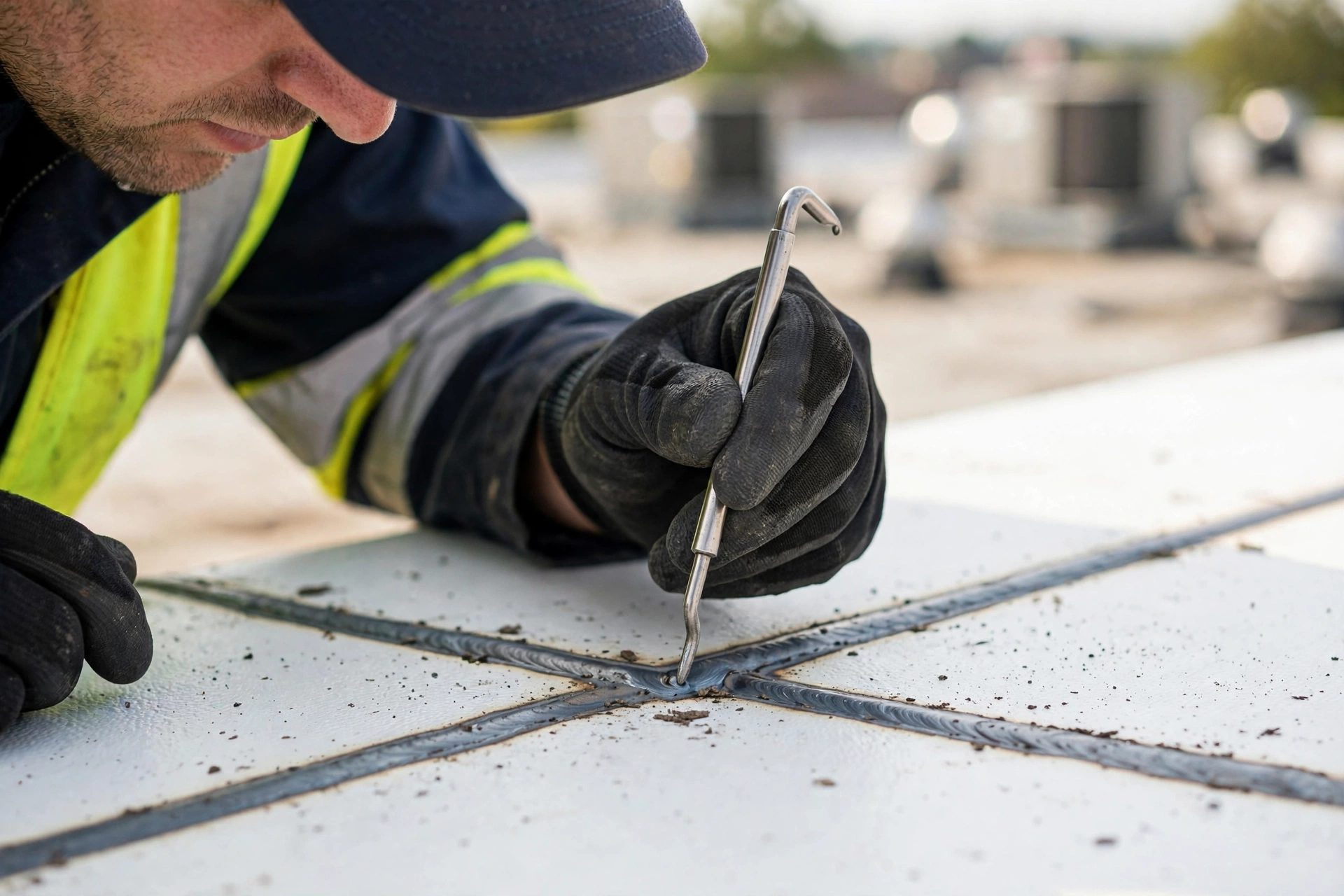
1. Maintenance, and there is no close second. Per NRCA guidance, proactive maintenance is the deciding factor in roof longevity. Twice-yearly inspections — spring and fall — plus clearing drains and fixing seam issues while they are small, routinely add 5 to 10 years. An unmaintained membrane dies from a thousand small failures that each cost a few hundred dollars to fix early.
2. Drainage. Ponding water is the silent killer of flat roofs. Single-ply warranties typically require that water not stand for more than 48 to 72 hours. A roof that ponds for a week after every storm ages years faster. If your roof has standing-water spots, that is the first problem to solve.
3. Foot traffic and penetrations. Every HVAC service visit is wear on the membrane. Walkway pads are cheap insurance. And every penetration — vents, curbs, pipes — is a future leak that depends on flashing done right.
How to use these numbers in your capital plan
Here is the rule I recommend to owners: start budgeting for replacement at 75% of the system’s expected life, not at 100%. A TPO roof at year 12 of a 15-to-20-year life is the time to get condition reports and pricing, not the time to be surprised. Replacement projects take months of bidding, tenant coordination, and seasonal scheduling.
Between 75% and end-of-life is also the coating window: if the roof is still sound — dry deck, decent seams, no saturated insulation — a coating at that point buys another 10 to 20 years at a fraction of replacement cost. That is the cheapest lifecycle play on most portfolios.
When you do budget, get real numbers for your market: our commercial roof replacement cost guide breaks down installed cost per square foot by system for 2026.
Last updated: October 2026
How long does a TPO roof last?
A TPO commercial roof typically lasts 15 to 20 years, or 20 to 25 with consistent maintenance. Early formulations had premature-degradation issues; modern TPO is significantly
more stable. Seam quality is the single biggest variable — poorly welded seams fail long before the membrane.
How often should you recoat a commercial roof?
Plan to re-coat roughly every 10 years to keep a fluid-applied coating system performing and its warranty in effect. Acrylic-elastomeric coatings average 7 to 12 years per application, urethane 8 to 12, and silicone 10 to 20, per industry application data (Inside Self Storage). A roof kept on a 10-year re-coat cycle can avoid a tear-off for decades.
Can a commercial roof last 50 years?
Yes — standing-seam metal routinely reaches 40 to 70 years, and individual single-ply roofs (especially EPDM) can push past 40 with excellent maintenance. But a membrane installed without a maintenance plan will not get there. The 50-year outcome is a maintenance outcome, not just a material outcome.
Leave a Reply