
Key takeaways
- An NDL (No Dollar Limit) warranty is a manufacturer warranty that pays the full cost — materials and labor — of repairing covered leaks on a commercial roof, with no dollar cap, typically for 10 to 30 years.
- “No dollar limit” does not mean “no limits”: standard exclusions include storm damage above the warranty’s wind-speed rating (often 55 mph), damage by other trades, and failures from neglected maintenance or ponding water.
- The fastest way building owners lose coverage is repairs by non-approved contractors and new roof penetrations (HVAC, solar, signs) installed without the roofing contractor of record.
- The inspection paper trail matters more than the warranty document itself: two professional inspections per year, a photo maintenance log, and prompt leak reporting are what keep a claim valid.
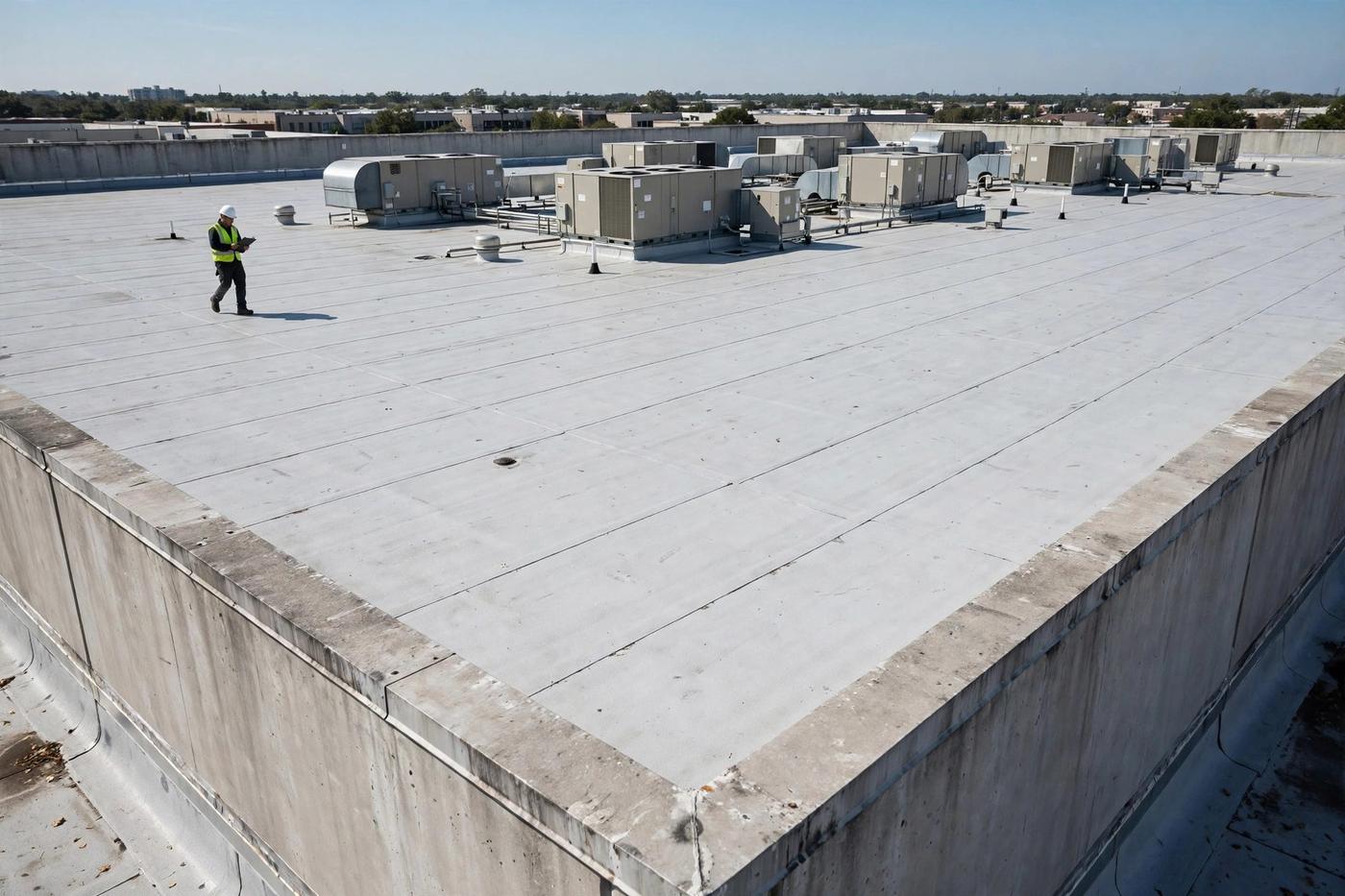
A commercial roofing NDL (No Dollar Limit) warranty is a manufacturer-issued warranty that covers the full cost of repairing covered leaks — materials and labor, with no dollar cap — typically for 10 to 30 years. It only covers leaks caused by material defects or installation workmanship, and only if the roof was installed by a certified contractor, inspected by the manufacturer, and maintained on schedule.
If you own or manage a commercial building, the NDL warranty is probably the most expensive piece of paper tied to your roof — and one of the least understood. I spent years on commercial and residential crews, and I watched more than one building owner assume “No Dollar Limit” meant “the manufacturer fixes anything, forever.” Then a leak showed up at year nine, the claim got denied over a drain that hadn’t been cleaned in three years, and the owner paid for the whole repair anyway.
Here’s what the warranty actually covers, what quietly kills it, and how to keep yours enforceable.
What “No Dollar Limit” really covers
Unlike a material-only warranty (which just ships you replacement membrane) or a capped labor-and-material warranty (which stops paying once it hits a dollar limit, often prorated downward), an NDL warranty commits the manufacturer to pay whatever it costs to restore the warranted roof to a watertight condition — no cap, even if repair costs far exceed the original roof price. As one commercial roofing guide notes, if you installed a roof for $100,000 and need warranty work 19 years later when costs have inflated to $185,000, the manufacturer covers the whole amount. (Roof-Crafters, 2026)
That coverage typically includes material manufacturing defects, installation errors by the approved contractor, all labor for covered repairs, replacement materials, and — a detail owners underestimate — the investigation cost of finding the leak source. Most NDL terms run 10 to 20 years, with premium options extending to 25–30 years or more, usually requiring heavier membranes and interim inspections. (East Valley Foam, 2026) Carlisle’s published TPO specifications, for example, offer terms from 5 to 30 years, with the longest terms limited to heavier membrane assemblies — and GAF’s WellRoof program can extend a Diamond Pledge NDL guarantee to a 35-year maximum when paired with annual inspections. (Advanced Roofing, 2026)
An NDL warranty is a system warranty, which matters: it’s issued against an approved assembly of that manufacturer’s components — membrane, insulation, fasteners, adhesives, flashings — not just the field membrane. That’s why manufacturers require installation by a certified contractor and their own representative’s inspection before the warranty is ever registered. The commercial roofing hub breaks down how these assemblies differ by system.
The six things that actually void an NDL warranty
Every NDL warranty has an exclusions section, and that’s the section that decides real claims. These are the six killers, roughly in the order I see them end coverage:
1. Repairs by non-approved contractors
This is the single most common coverage killer. The moment someone other than the manufacturer-approved contractor of record patches, seals, or modifies the roof, most NDL warranties are voided for the affected area — or entirely. That includes your in-house maintenance crew with a bucket of sealant. Incompatible repair materials on a TPO or EPDM membrane are a classic denial trigger. (For context on how these membranes fail, see our TPO vs EPDM comparison.)
2. New penetrations installed without approval
HVAC curb added by the mechanical contractor. Solar array by the solar company. New grease exhaust, signage, a skylight. Every new hole in the membrane is an alteration, and manufacturers require that penetrations be flashed by the roofing contractor of record (or pre-approved in writing) to keep coverage. Damage stemming from roof protrusions installed by others is routinely excluded — the warranty covers the manufacturer’s system, not what other trades cut into it.
3. Neglected maintenance and ponding water
Flat roofs are not maintenance-free; they’re maintenance-dependent. Clogged drains, debris piles, and vegetation on the membrane are the owner’s responsibility, and most manufacturers will void coverage if water ponds for longer than 24 to 48 hours — ponding is treated as a drainage/design deficiency, not a covered defect. (RAND Engineering, 2026) Skipped owner maintenance, unreported leaks, and repairs with incompatible materials top every void list. (Advanced Roofing, 2026)
4. Leaks you didn’t report promptly
Many NDL warranties require written notice of leaks within a defined window after discovery. A leak you noticed in March and reported in September gives the manufacturer an easy denial: the resulting damage grew worse because of your delay, not because of their membrane. Report every leak immediately and in writing — an email counts.
5. Weather beyond the warranty’s wind rating
An NDL warranty is not insurance. Most carry a stated wind-speed ceiling — commonly around 55 mph for base coverage, with higher riders available — measured as a 3-second peak gust. As Carlisle’s technical guidance puts it: a roofing warranty is not building insurance. Hurricane and severe-hail damage above the rating belongs to your property insurer, not the manufacturer. (Advanced Roofing, 2026) Confirm the wind clause with both the warranty and your insurance agent.
6. Building movement, chemicals, and traffic
Structural settlement and deck movement, chemical or grease exposure beyond what the membrane is rated for (restaurants take note), and abuse — heavy foot traffic, stored equipment, pressure washing that scars the membrane — all sit outside coverage. Warranties cover the roof surface and base flashing, not parapet walls, copings, decks, or design flaws. (RAND, 2026)
How to keep your NDL warranty enforceable
If you take one idea from this article, make it this: the inspection paper trail is the warranty. A manufacturer’s representative deciding a claim looks at documentation, not at how confident you sound.
- Two professional inspections per year — spring and fall — by a manufacturer-certified contractor, plus one after every major storm. (Delta Services, 2026)
- A maintenance log with dates, photos, and notes for every inspection, cleaning, and repair. Our twice-yearly commercial roof maintenance checklist is built exactly for this.
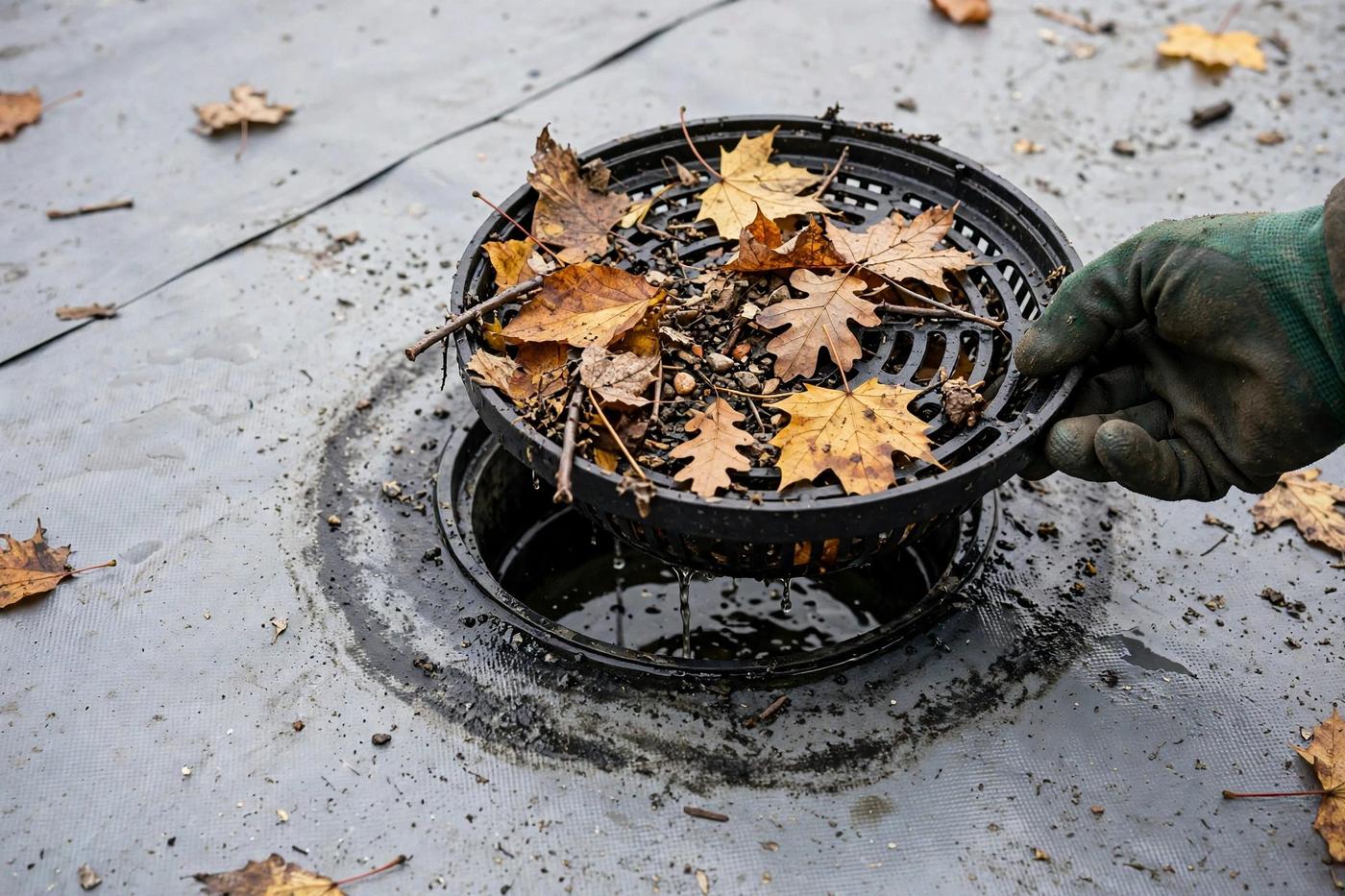
- Drains, scuppers, and gutters clear at all times. Ponding past 48 hours is the denial manufacturers reach for first.
- Any modification in writing, first. Before an HVAC curb, solar, or any penetration: written approval from the manufacturer and flashing by the contractor of record.
- Report leaks in writing the day you find them, and only let approved contractors touch the membrane.
One more timing note: NDL terms (10–30 years, 20 the most common) usually run shorter than the membrane’s actual service life, which is why many owners pair the warranty with a planned re-roof budget. Our guide on how long commercial roofs last by system and the commercial replacement cost per square foot will help you size that reserve.
Is the NDL upgrade worth it?
It costs more than a standard warranty — expect the premium to scale with term length and system weight. For a building you’ll hold for 10+ years, the math is straightforward: uncapped material-and-labor coverage against two decades of inflation, plus the discipline of manufacturer inspections that catch small problems early. Architects and engineers routinely spec NDL on large commercial projects for exactly that reason. (Roof-Crafters, 2026) For a building you’ll sell in three to five years, a contractor workmanship warranty plus a shorter manufacturer term may be the better use of the money. Match the term to your ownership horizon, not to your ego.
Last updated: October 2026
Disclaimer: warranty terms, exclusions, and wind-speed ratings vary by manufacturer and product line — read the actual issued warranty document for your building, not just the brochure. Cost examples are illustrative ranges; get local quotes for your project.
Frequently asked questions
How long does a commercial roof NDL warranty last?
Most NDL warranties run 10 to 30 years, with 20 years the most common term. Premium terms of 25–30 years (up to 35 under programs like GAF’s WellRoof with annual inspections) typically require heavier membranes, upgraded components, and scheduled manufacturer inspections.
Can a commercial roof warranty be transferred when I sell the building?
Often, but not automatically. Transfer usually requires a written request to the manufacturer, and some programs require an inspection or a fee before coverage passes to the new owner. Buyers should request the warranty document, the full inspection history, and the transfer terms during due diligence.
Is an NDL warranty the same as roof insurance?
No. The warranty covers leaks from material defects or approved-contractor workmanship up to its wind-speed rating. Storm damage beyond that rating, vandalism, and consequential damage to contents are insurance matters. As Carlisle’s technical guidance states, a roofing warranty is not building insurance.
Leave a Reply